What is Soil Compaction?
Table of Contents
- Understanding Soil Compaction
- Why Soil Compaction Matters
- Matching Compaction Methods to the Material
- How Moisture Affects Compaction
- Building Up in Controlled Layers
- How is Compaction Checked on Site?
- Where Compaction Supports Ground Engineering
- Compaction, Consolidation and Deeper Treatment
Last updated
22 October 2026
Understanding Soil Compaction
Soil compaction is the mechanical densification of soil through pressure, vibration or impact. It forms part of earthworks involving both existing ground and newly placed fill.
Different soils respond differently to this process. Their composition and moisture content influence how readily they compact.
Why Soil Compaction Matters
Loosely placed fill can compress under the weight of new construction. If this movement varies across an area, it can leave floors, foundations and paved surfaces with uneven support, causing cracking or changes in level.
Compaction reduces air voids and brings soil particles into closer contact. This helps suitable fill resist deformation and carry applied loads, creating a more consistent base for subsequent work.
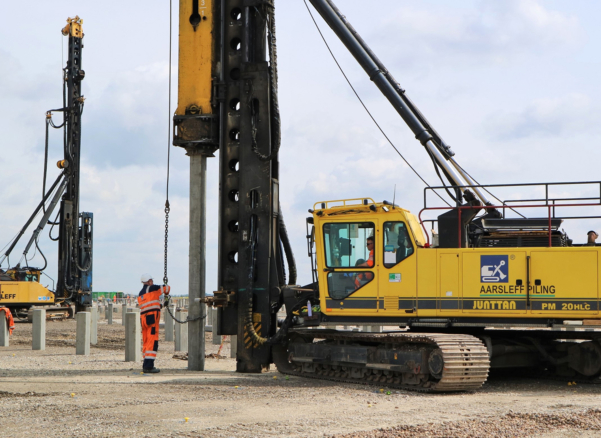
Its importance extends beyond the finished structure. Properly compacted material also supports stable access routes and working platforms for piling rigs and other heavy plant.
Matching Compaction Methods to the Material
Equipment selection depends on particle size, soil behaviour, treatment depth and available working space. Common approaches include:
- Vibratory rollers: use vibration and drum weight to compact granular materials such as sand, gravel and suitable fill.
- Padfoot rollers: apply concentrated pressure and kneading action, commonly used for cohesive soils.
- Vibrating plates: compact suitable granular layers in smaller areas where larger plant cannot operate.
- Rammers: deliver repeated impacts for confined work, including appropriate trench-backfill applications.
- Specialist deep compaction: treats suitable loose deposits below the effective reach of ordinary surface equipment.
Method selection also accounts for nearby buildings, buried services and vibration limits. Larger equipment or additional passes will not necessarily correct unsuitable material or excessive moisture.
How Moisture Affects Compaction
Soil does not respond to compaction in the same way at every moisture content. When material is too dry, friction between particles can make rearrangement difficult. Adding a controlled amount of water can help achieve a denser structure.
Too much water presents a different problem. Wet material may deform beneath equipment without achieving the required density, particularly in fine-grained soils.
Laboratory testing establishes the relationship between moisture content and dry density for a specified compactive effort. The peak of this relationship identifies the maximum dry density and its corresponding optimum moisture content. These values provide a reference for earthworks specifications; they are not universal properties shared by every soil.
Building Up in Controlled Layers
Engineered fill is normally placed in layers, often called lifts. Each layer is spread, conditioned where necessary and compacted before the next is added.
Layer thickness must suit the material and equipment. If too much fill is placed at once, the surface may become dense while the lower portion remains inadequately compacted. A firm-looking finish can therefore conceal inconsistent support.
Work beside retaining walls needs particular care. Compaction equipment can impose additional lateral pressures, so plant selection, stand-off distances and the backfilling sequence must follow the design requirements.
Weather and drainage affect progress throughout placement. Saturated material may require drying, reworking, or replacement before construction can continue.
How is Compaction Checked on Site?
Verification follows the project specification. Field density and moisture measurements may be compared with laboratory results to assess whether placed material meets the required degree of compaction.
Other specifications prescribe a defined method, including equipment, layer thickness and passes. Trial areas can help establish a workable procedure before larger-scale placement begins.
Where specified, plate loading or other stiffness tests provide additional information about ground response. These measurements assess different properties and should not be treated as interchangeable with density results.
Where Compaction Supports Ground Engineering
Infrastructure and rail projects use controlled compaction in embankments, access routes and prepared formation layers. Residential, commercial and institutional developments require suitable fill beneath ground-bearing floors, external paving and service areas.
Marine works may involve compacting reclamation fill or port hardstandings, while energy facilities require prepared ground for access roads, compounds and operational areas. Treatment methods vary with deposit depth and condition.
Within piling projects, compacted granular material can form part of an engineered working platform. Its performance must be assessed against the rig loads and underlying ground; compaction alone does not establish that a platform is suitable.
Records should identify the material, location, layer and test outcome. This allows areas requiring further treatment to be addressed before they are covered.
Compaction, Consolidation and Deeper Treatment
Compaction differs from consolidation. Consolidation involves time-dependent compression as excess pore water pressure dissipates under sustained loading, often within saturated fine-grained soils. A well-compacted surface cannot prevent settlement arising from untreated compressible layers below it.
Where deeper ground needs improvement, specialist methods may be considered. Compaction grouting, for example, introduces stiff grout that displaces and densifies suitable surrounding soil. Other sites may require a different ground improvement technique or piled foundations.
The appropriate solution follows the ground investigation and intended use. Defining the required performance first, then matching treatment and verification to it, helps establish dependable support for the works above.

Written by Aarsleff UK
22 October 2026
Aarsleff Ground Engineering is a leading sheet piling supplier and contractor. We specialise in designing and delivering sheet piling solutions across the UK.

Reviewed by Mark Fuller, Piling Director
7 October 2026
Mark Fuller is the Piling Director at Aarsleff Ground Engineering. He has amassed a wealth of experience and knowledge within the specialist piling and ground engineering industry throughout his 20 years of experience in the industry. Mark is directly responsible for the overall driven piling within the business, including technical and operational management of awarded contracts, development of strategic long-term plans and planning of recruitment and resource.
Close