Table of Contents
- What is a Piling Rig?
- The Main Components of a Piling Rig
- Where Piling Rigs Support Construction
- What Are the Different Types of Piling Rigs?
- Matching the Rig to the Site Conditions
- Why Working Platform Design Matters
- What Can Rig Monitoring Records Show?
Last updated
22 October 2026
What is a Piling Rig?
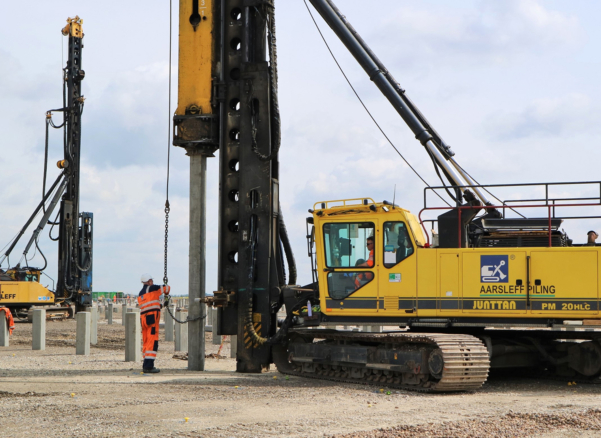
Piling rigs are specialist machines used to install piles for foundations and retaining structures. Depending on their configuration, they drive prefabricated elements into the ground or drill or bore holes for concrete piles.
Equipment ranges from compact machines for restricted access to large rigs handling long, heavy piles or substantial drilling tools. Each combines a supporting carrier with machinery suited to a particular installation method.
The Main Components of a Piling Rig
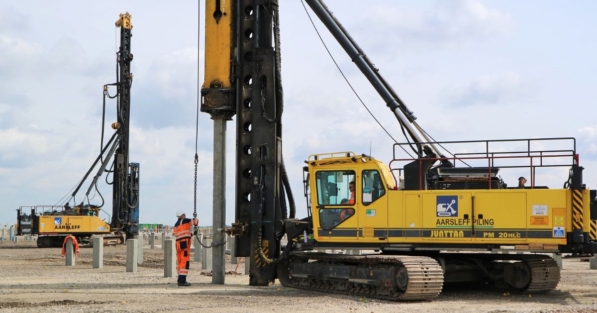
Although designs vary, most rigs bring together several principal components:
- Carrier and tracks: support the machine and allow it to move between pile positions.
- Mast or leader: guides the hammer, rotary head or tooling along the required alignment.
- Installation equipment: delivers impact, rotation or vibration according to the piling method.
- Winches and lifting systems: handle piles, tools and other loads within their rated capacities.
- Power and hydraulic systems: supply the energy needed for working movements.
- Controls and instrumentation: let the operator manage equipment settings and monitor installation parameters.
The complete arrangement determines what the machine can do. Changing an attachment may expand its applications, but only where the rig and associated equipment are designed for that configuration.
Where Piling Rigs Support Construction
Piling rigs provide deep foundations for residential developments, commercial buildings and institutional facilities such as schools and hospitals. They also construct secant and contiguous pile walls where excavations require earth retention.
Infrastructure and rail schemes use piling for bridges, stations, transport corridors and associated structures. Marine works can involve quay walls, jetties and harbour developments, sometimes requiring equipment to operate from a purpose-designed barge or jack-up platform.
Energy projects range from substation foundations to wind turbine installations and generating facilities. Across these ground engineering applications, the rig carries out the specified construction method rather than determining the foundation solution itself.
What Are the Different Types of Piling Rigs?
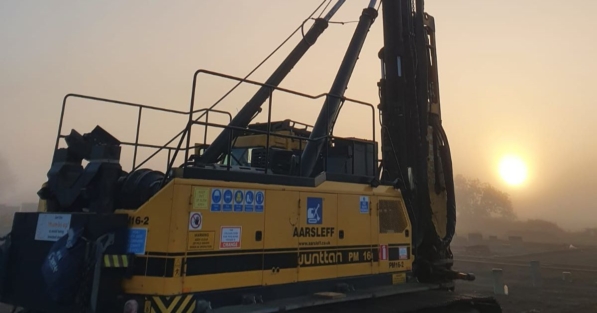
Piling rigs are commonly grouped by their installation method. Types include:
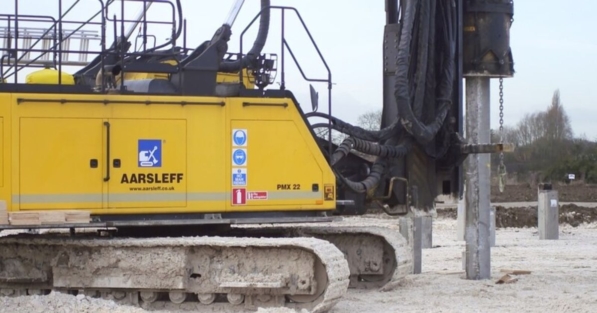
- Driven piling rigs install prefabricated elements, such as precast concrete or steel piles, using a hammer or vibratory attachment. A leader guides the pile as it enters the ground. Impact hammers apply repeated blows, while vibratory equipment uses oscillation to assist penetration. The attachment depends on the pile type and ground conditions.
- Rotary bored piling rigs excavate a hole before placing reinforcement and concrete. A rotary drive commonly connects to a telescopic Kelly bar, with interchangeable augers, buckets or core barrels cutting through the ground. Operators lift the tool periodically to empty the excavated material. Temporary casing or support fluids can maintain bore stability during construction.
- Continuous flight auger (CFA) rigs drill using a long, hollow-stemmed auger. Once the required depth is reached, operators pump concrete through the central stem as they withdraw the auger. A reinforcement cage is then inserted into the fresh concrete. Instrumentation records drilling and concreting data to help control pile formation.
- Mini piling rigs provide compact arrangements where access or headroom limits larger machines. Short masts and, on some models, separate power packs let equipment fit within confined work areas. Depending on their configuration, these rigs can install small-diameter piles using drilling or driving techniques.
- Multipurpose rigs can accommodate several methods by changing attachments and machine configuration.
Matching the Rig to the Site Conditions
Selection begins with the pile design and ground investigation. The required depth, diameter, or section size must fall within the equipment’s capabilities. Dense layers, rock and buried obstructions can change the power and tooling needed.
Site geometry matters too. Access width, turning space and overhead clearance determine whether a machine can reach and operate at each position. Compact or low-headroom rigs may suit work inside existing buildings, although their capacity must still meet the foundation requirements.
Nearby homes, occupied buildings and sensitive infrastructure can constrain noise and vibration. These considerations influence the installation method and the choice of machine.
Why Working Platform Design Matters
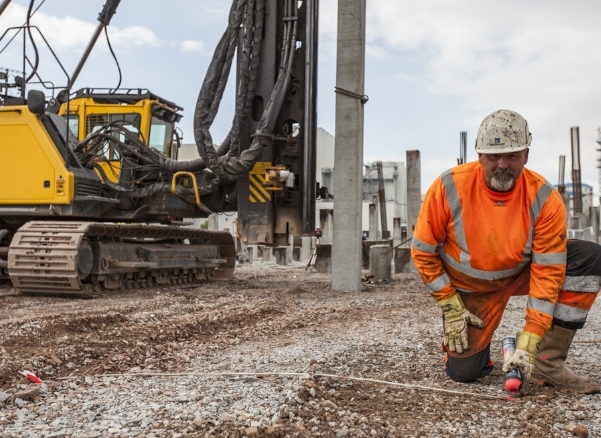
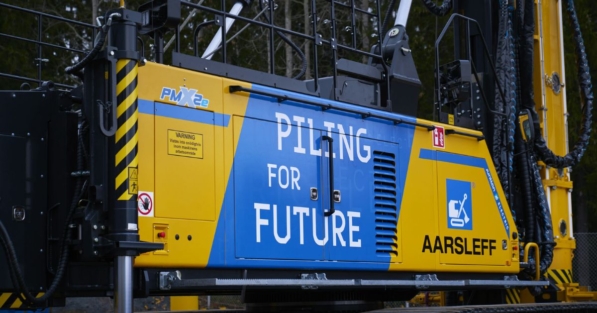
A tracked rig needs a working platform designed for its actual operating loads and the underlying ground. Machine weight alone does not describe the loads imposed through its tracks; lifting, drilling and changes in rig configuration can alter the loading.
Platform provision includes suitable access routes and ramps. Drainage, defined edges and properly reinstated excavations help maintain support as work progresses.
Inspection and maintenance continue throughout the piling programme. A surface that appears firm can conceal weak areas, so visual appearance does not replace appropriate design and construction checks.
What Can Rig Monitoring Records Show?
Depending on the equipment, instrumentation can record depth, inclination, torque or driving information. CFA systems may also monitor concrete pressure and volume alongside auger withdrawal.
These records help the site team compare installation with specified requirements and investigate unexpected changes. They complement supervision and any required pile testing.
A suitable rig therefore needs sufficient reach and power for the specified piling method and site conditions. Coordinating its operation with material deliveries, spoil handling and quality checks helps maintain an orderly progression from the first pile position to the completed foundation works.

Written by Aarsleff UK
22 October 2026
Aarsleff Ground Engineering is a leading sheet piling supplier and contractor. We specialise in designing and delivering sheet piling solutions across the UK.

Reviewed by Mark Fuller, Piling Director
6 October 2026
Mark Fuller is the Piling Director at Aarsleff Ground Engineering. He has amassed a wealth of experience and knowledge within the specialist piling and ground engineering industry throughout his 20 years of experience in the industry. Mark is directly responsible for the overall driven piling within the business, including technical and operational management of awarded contracts, development of strategic long-term plans and planning of recruitment and resource.
Close