What is a Ground Investigation?
Table of Contents
- Understanding Conditions Below Ground
- Why Ground Investigations Matter Before Construction
- How Ground Information Is Collected
- Where Ground Investigations Are Used
- Connecting Findings to Engineering Design
Last updated
22 October 2026
Understanding Conditions Below Ground
A ground investigation examines soil, rock and groundwater to establish how a site will respond to proposed construction. It combines fieldwork, sampling and testing to provide information for geotechnical design.
Investigations support new developments and assessments of existing structures, including sites affected by settlement or slope movement. The scope of the investigation follows the engineering questions involved, from identifying suitable foundation layers to understanding groundwater conditions around an excavation.
Why Ground Investigations Matter Before Construction
A site’s surface can reveal little about what lies beneath. Previous development may have left buried foundations or variable fill, while groundwater conditions can change across relatively short distances.
Discovering these conditions during construction can interrupt excavation, require different equipment or alter the planned work sequence. Identifying them earlier gives project teams time to prepare suitable methods and account for them within the programme and budget.
Ground investigation therefore supports practical planning before machinery arrives. It helps identify where construction may be straightforward and where additional preparation or specialist ground engineering may be required.
How Ground Information Is Collected
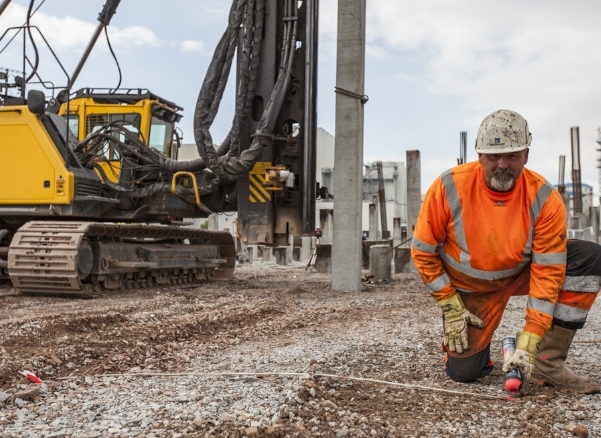
Planning begins with available geological records, previous investigations and site history. A site walkover helps identify surface features, access constraints and evidence of earlier development.
Boreholes provide access to deeper strata, while trial pits expose shallow ground and existing foundations. Standard penetration testing (SPT) and cone penetration testing (CPT) measure ground resistance, and recovered samples undergo laboratory testing for relevant physical and chemical properties. Monitoring installations can record groundwater levels or ground gas conditions over time.
Engineers bring these findings together in a ground model describing the layers beneath the site, their properties and how they vary across the site. This provides a shared basis for design and a reference against which construction observations can be assessed.
Where Ground Investigations Are Used
Investigation requirements vary depending on the proposed works and the land’s previous use. Typical applications include:
- Residential developments: assessing foundation conditions, made ground and the potential for settlement beneath homes and external areas.
- Commercial projects: investigating support for warehouses, offices and heavily loaded floors, alongside basement excavation requirements.
- Institutional buildings: examining ground beneath schools, hospitals and extensions close to existing facilities.
- Infrastructure and rail: identifying changes along roads, railway corridors and bridge approaches that may affect foundations or earthworks.
- Marine developments: assessing seabed deposits and coastal ground beneath proposed quays, jetties and harbour structures.
- Energy facilities: obtaining design information for turbine foundations, substations and associated access routes.
Connecting Findings to Engineering Design
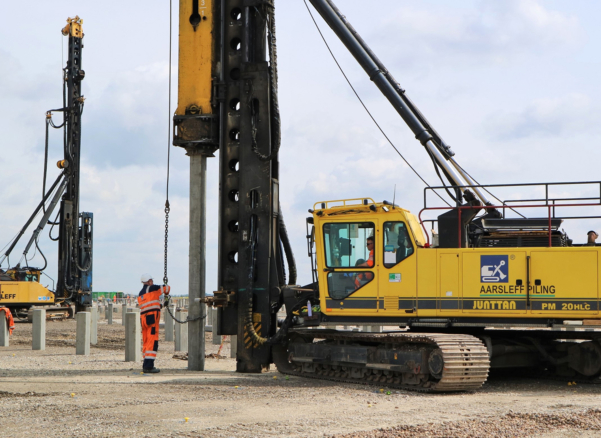
Ground investigation helps determine whether shallow foundations are appropriate or whether piling is needed. For driven precast concrete piling, CFA piles and bored piles, the ground profile informs assessments of pile resistance, founding depth and installation conditions.
Retaining walls use information about soil strength and groundwater conditions alongside the proposed loading. These findings influence systems such as sheet piling, secant pile walls and king post walls. Ground anchors and soil nailing require an understanding of the materials in which resistance will develop.
Investigation can also identify a need for ground treatment. Underground voids may lead to a drilling and grouting scheme, while compressible deposits may prompt the use of rigid inclusions or other settlement-control measures.
By establishing these conditions early, ground investigation connects the proposed structure with the engineering required below ground. The findings help engineers develop a foundation, ground improvement or retaining solution suited to the conditions encountered on site.

Written by Aarsleff UK
22 October 2026
Aarsleff Ground Engineering is a leading sheet piling supplier and contractor. We specialise in designing and delivering sheet piling solutions across the UK.

Reviewed by Mark Fuller, Piling Director
7 October 2026
Mark Fuller is the Piling Director at Aarsleff Ground Engineering. He has amassed a wealth of experience and knowledge within the specialist piling and ground engineering industry throughout his 20 years of experience in the industry. Mark is directly responsible for the overall driven piling within the business, including technical and operational management of awarded contracts, development of strategic long-term plans and planning of recruitment and resource.
Close