Geothermal Energy Solution

Why Choose Energy Piles?
Integrated Efficiency
Energy Piles combine structural support with geothermal energy extraction, reducing installation complexity and cost. No extra land or boreholes required.
Low-Carbon Heating & Cooling
Harness stable ground temperatures to deliver efficient heating in winter and passive cooling in Summer – reducing reliance on fossil fuels and cutting emissions.
Future-Proof Compliance
Meet and exceed the Future Homes Standard with a solution that supports zero-carbon targets without compromising on performance or affordability.
Scalable & Versatile
Suitable for individual homes or district networks, Energy Piles adapt to a wide range of building types and energy demands.
How it Works
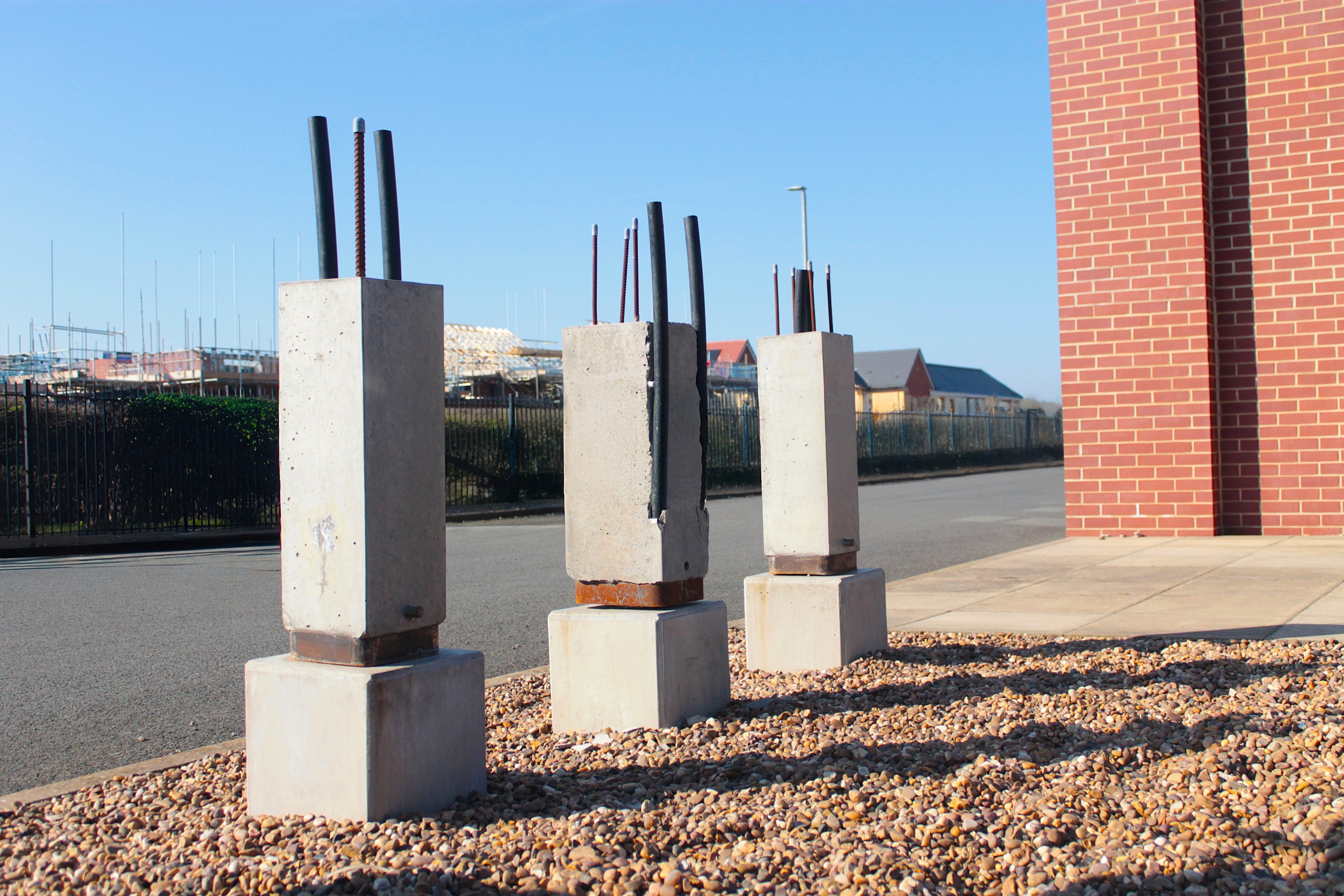
Energy Piles circulate a coolant fluid through embedded PEXA tubes,
transferring heat to and from the ground.
PEXA Tubes
Bound inside the reinforcement cage, the PEXA tubes are
used to circulate the fluid carrying the energy. The tubes are joined with arc welding, ensuring a 100% air and water tight
connection.
Reinforcement Cage
The reinforcement cage is similar to those found in standard
precast piles and contains vertical steel rods, bound and
welded together with hanger wire.
Walsh Spacer (patent pending)
Our unique spacer which ensures viability of follow on works
with ease, reducing potential programme delays.
Concrete Layer
The reinforcement cage and the PEXA tubes are covered and
cast in a layer of concrete, which ensures that the Energy Pile is strong enough to carry its designated building.
The concrete layer also protects the PE tubes indefinitely.
Designed for Seamless Integration
Our in-house design team ensures optimal pile configuration for each project.
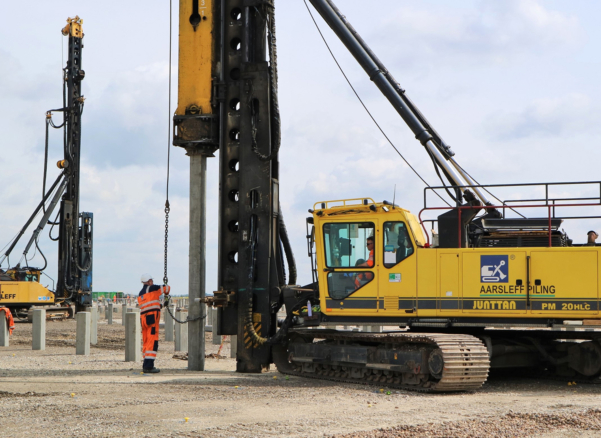
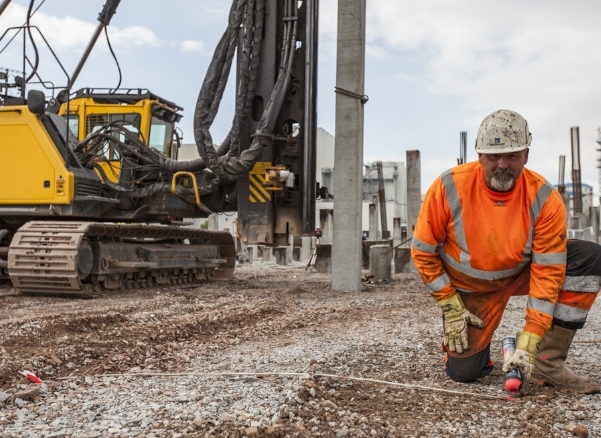
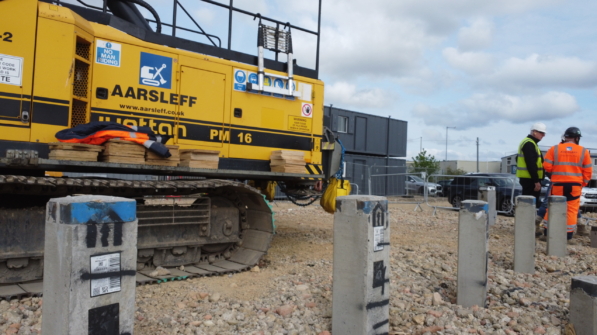
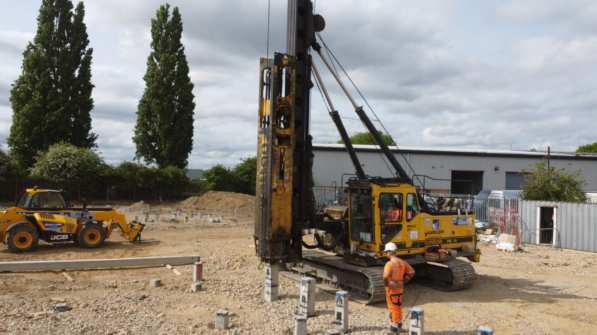
Installation aligns with standard precast piling methods, using Aarsleff’s fleet
and expertise. Pressure testing guarantees airtight, watertight performance
before connection to the energy centre.

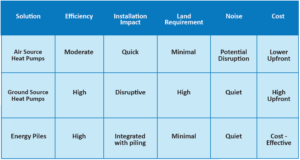
Energy Piles vs. Traditional Low-Carbon Systems
Energy Piles deliver the efficiency of ground source systems without the disruption or
cost of borehole drilling.
Supporting the Future Homes Standard
For residential developments, the Future Homes Standard sets the benchmark for
low-carbon homes, aiming to ensure that new homes almost completely eliminate
emissions related to heating, cooling and energy use.
The current consultation and guidance documents lay out two options for how housebuilders may approach this:
Option 1:
• Decentralised mechanical ventilation (dMEV)
• High efficiency solar PV panels
• Airtightness result of 4
Option 2:
• Natural ventilation
• Intermittent extractor fans
• Airtightness result of 5
• No solar PV panels
Close