Table of Contents
- About Kelly Bars
- Where Are Kelly Bars Commonly Used?
- How a Kelly Bar Operates During Drilling
- What Are the Different Types of Kelly Bar?
- Keeping the Bore Stable During Excavation
- How Kelly Drilling Differs from CFA Piling
- What Determines the Working Depth?
Last updated
22 October 2026
About Kelly Bars
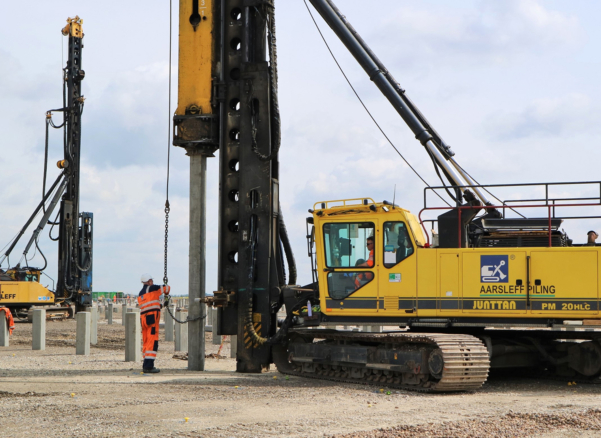
A Kelly bar is a telescopic steel assembly that connects a rotary piling rig’s drive to its drilling tool. It transfers rotational force (torque) and downward force to an auger, drilling bucket, or core barrel.
Nested sections extend as drilling progresses, allowing the tool to reach below the rig without requiring a single shaft of the same length. The bar forms part of the drilling equipment and is withdrawn during construction; it does not remain within the finished pile.
Where Are Kelly Bars Commonly Used?
Kelly bars are used in rotary bored piling to construct deep foundations and piled retaining walls. Typical applications include:
- Infrastructure: bored foundations for bridges, highway structures and major utility works.
- Marine: drilling for piles beneath quays, jetties and port infrastructure.
- Residential: foundations and basements for apartment buildings and housing developments.
- Institutional & Cultural: piled support for hospitals, schools and university buildings.
- Commercial: deep foundations beneath offices, warehouses and retail premises.
- Rail: piling for station structures, railway bridges and depot developments.
- Energy: foundation works for generating facilities, substations and wind turbine structures.
Within ground engineering, this equipment can also form the bores for secant and contiguous pile walls. Selection depends on the proposed pile dimensions, ground profile and working conditions.
How a Kelly Bar Operates During Drilling
The rig’s rotary drive engages with the bar, turning the attached tool against the ground. Depending on the assembly, drive keys and locking mechanisms transfer forces between its telescopic sections. The crowd system supplies downward force to help the cutting edges penetrate.
Excavation proceeds in repeated cycles. An auger carries loosened material on its flights, while a drilling bucket collects spoil inside its body. Once loaded, the tool is raised from the bore, emptied at the surface and lowered again.
Different attachments address changes in strata. A core barrel, for example, cuts around a cylinder of harder material so it can be broken out and removed. Tool choice therefore affects how excavation progresses through soil, obstructions or rock.
After reaching the required depth, the bore is prepared for reinforcement and concreting. These later operations form the structural pile.
What Are the Different Types of Kelly Bar?
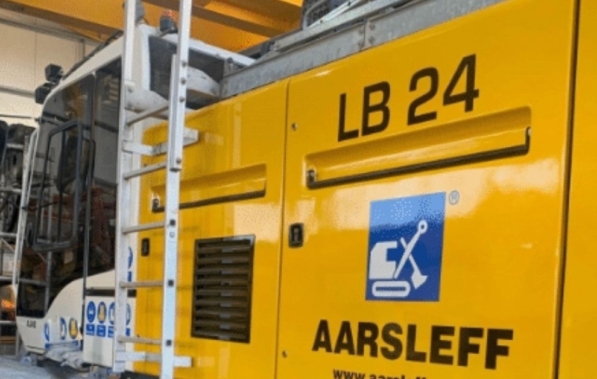
Kelly bars fall into two main types: friction and interlocking. Their main distinction concerns how downward drilling force passes between the telescopic sections.
Friction Kelly Bars: Sections extend and retract without engaging mechanical locking points. Friction between the contacting drive surfaces transmits downward pressure. These assemblies commonly suit soil drilling where relatively modest crowd force is sufficient.
Interlocking Kelly Bars: Mechanical locking points engage the sections at defined positions. This arrangement allows greater downward force to reach the tool, helping it penetrate dense deposits and harder strata. The operator releases these connections before retracting the assembly.
Some designs combine friction and mechanically locking sections within one bar. These mixed configurations provide another option when matching drilling depth and crowd requirements to a particular rig.
Keeping the Bore Stable During Excavation
A Kelly bar drives the tool but does not support the hole’s sides. Stable ground may permit open-bore construction; loose deposits or groundwater can require additional measures.
Temporary casing provides physical support around the excavation. Alternatively, suitable support fluids can help maintain bore stability where the chosen method allows. Ground investigation findings inform this decision before drilling begins.
This distinction matters when assessing suitability. A rig may have enough power to excavate a stratum, but construction still requires a way to prevent collapse or uncontrolled groundwater entry.
How Kelly Drilling Differs from CFA Piling
Kelly drilling removes spoil intermittently using relatively short tools. Conventional continuous flight auger (CFA) piling uses a long, flighted auger that remains in the ground until it reaches the design depth.
Their concreting sequences also differ. A rotary bored pile normally receives its reinforcement cage before concrete placement. With CFA piling, operators pump concrete through the hollow auger stem during withdrawal, then insert the cage.
These differences influence equipment selection, spoil handling and reinforcement installation. Neither approach suits every project; the foundation design and ground investigation guide the choice.
What Determines the Working Depth?
Achievable depth depends on the complete rig configuration. Extended bar length, drilling-tool dimensions and the rotary drive’s position all contribute, while winch capacity limits the weight it can handle.
Available headroom also matters. Short-mast arrangements and purpose-designed bars can accommodate restricted working heights, although their reach differs from standard configurations. Equipment ratings must therefore be checked for the actual setup, not assumed from the rig model alone.
Considering these constraints alongside access and ground conditions helps establish a workable drilling arrangement before mobilisation. The aim is to reach the specified founding level with equipment suited to each excavation stage.
Written by Aarsleff UK
22 October 2026
Aarsleff Ground Engineering is a leading sheet piling supplier and contractor. We specialise in designing and delivering sheet piling solutions across the UK.

Reviewed by Mark Fuller, Piling Director
6 October 2026
Mark Fuller is the Piling Director at Aarsleff Ground Engineering. He has amassed a wealth of experience and knowledge within the specialist piling and ground engineering industry throughout his 20 years of experience in the industry. Mark is directly responsible for the overall driven piling within the business, including technical and operational management of awarded contracts, development of strategic long-term plans and planning of recruitment and resource.
Close