What is Subsidence?
Table of Contents
- Understanding Subsidence and Ground Movement
- Subsidence, Settlement and Heave Explained
- What Causes the Ground to Subside?
- Where Subsidence Affects Construction
- Which Signs Require Further Investigation?
- How Is Suspected Subsidence Investigated?
- Ground Engineering Options for Remedial Work
- Reducing Risk in Future Development
Last updated
22 October 2026
Understanding Subsidence and Ground Movement
Subsidence is the downward movement of the ground caused by changes beneath its surface. As ground support reduces, foundations, buildings and other structures may move with it.
Movement can develop gradually or occur suddenly, depending on the cause. Uneven subsidence is particularly significant because different parts of a structure can move by different amounts, straining walls, floors and connections.
Subsidence, Settlement and Heave Explained
These terms describe related forms of movement, but they are not interchangeable.
In building investigations, settlement generally refers to downward movement as the ground compresses under an applied load. This can occur after construction and must remain within the limits allowed for in the design.
Subsidence commonly describes sinking associated with a change or loss of support beneath the structure. Heave is upward movement, which can occur when susceptible clay absorbs water and expands.
Terminology can overlap in geotechnical reporting. Establishing the physical mechanism is more useful than relying on the label alone, particularly where remedial work is being considered.
What Causes the Ground to Subside?
Subsidence can result from natural processes or changes associated with development and historical land use. Potential causes include:
- Clay shrinkage: moisture loss reduces the volume of susceptible clay soils, sometimes influenced by prolonged dry weather or water uptake by vegetation.
- Leaking drains or water pipes: escaping water can wash fine particles from suitable soils, reducing support beneath or around foundations.
- Underground workings: deterioration or collapse of abandoned mines, shafts and other excavated spaces can affect the ground above.
- Dissolution of soluble rock: groundwater can gradually create cavities in materials such as chalk, limestone or gypsum.
Nearby excavation or tunnelling: ground loss or inadequate support can cause movement beyond the immediate working area.
More than one mechanism may contribute. Identifying the cause matters because treating visible damage alone does not resolve continuing movement below ground.
Where Subsidence Affects Construction
Residential, commercial and institutional buildings can be affected when foundation support changes beneath homes, workplaces, schools or hospitals. Consequences may extend to paved areas, drainage and buried utilities.
Infrastructure and rail schemes require consideration of movement beneath roads, embankments, tracks and bridge approaches. In marine settings, loss of material behind quay structures can affect adjoining ground. Energy facilities may face risks from former workings, variable deposits or changes around buried services.
Retaining walls and neighbouring structures also factor into the assessment. Their movement can alter support conditions beyond an individual building’s footprint.
Which Signs Require Further Investigation?
Possible indications of foundation movement include:
- Progressive cracking: cracks that widen, extend or reappear after repair.
- Distortion around openings: doors or windows becoming difficult to operate as frames move.
- Changes in floor level: new slopes, depressions or separation at adjoining surfaces.
- Movement between connected elements: gaps developing between an extension and the original building, or around attached services.
- Local ground depressions: sinking beside foundations, drainage runs or external structures.
These observations do not confirm subsidence on their own. Thermal movement, material shrinkage and other defects can produce similar symptoms. The pattern, timing and progression of damage need to be assessed together.
How Is Suspected Subsidence Investigated?
The investigation is tailored to the site, but commonly follows this sequence:
- Review available information. Examine geological records, previous ground investigations, mining history, structural drawings and the timing of reported damage.
- Inspect the affected area. Record cracking, distortion, ground levels and the condition of nearby structures, drainage and vegetation.
- Investigate below ground. Use appropriate trial pits, boreholes, sampling or drainage surveys to examine foundations and investigate possible causes.
- Measure movement where needed. Monitor cracks or levels to establish whether changes are ongoing, seasonal or linked to particular events.
- Assess the evidence. Combine structural and geotechnical findings to identify the likely mechanism and determine suitable action.
Not every project requires every technique. Rapid deterioration or significant instability may require protective measures before a longer monitoring programme can be completed.
Ground Engineering Options for Remedial Work
The response should address the established cause. Repairing defective drainage may be sufficient in some cases, while vegetation-related movement requires specialist assessment of both shrinkage and potential heave.
Where underground voids threaten support, drilling and grouting may form part of a designed treatment scheme. Other ground improvement methods can be considered where their effects suit the soil and surrounding structures.
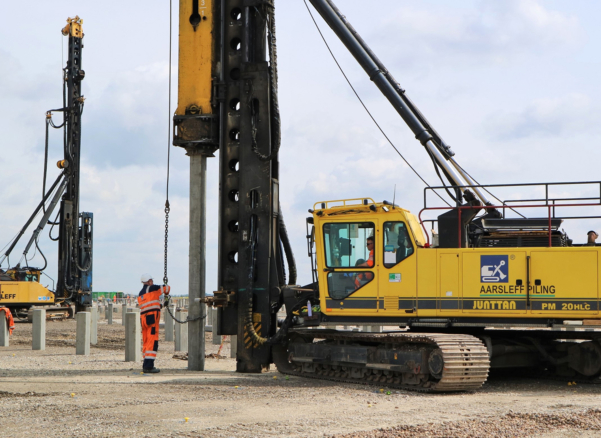
Underpinning strengthens or modifies existing foundations. Piled arrangements, including mini piling where access is restricted, can transfer loads to suitable deeper ground through designed connections. Underpinning is not required for every subsidence case, and piling does not automatically resolve associated movement in floors, services or adjacent ground.
Reducing Risk in Future Development
For new works, ground investigations should consider natural hazards, previous site uses and neighbouring structures before selecting foundations. Drainage layouts, landscaping and excavation proposals also need to be coordinated with the ground model.
Existing sites benefit from maintaining drainage and reviewing significant changes near foundations. Repairs should be followed by the checks specified for the particular scheme, rather than judged solely by the disappearance of cracks.
A durable response brings the ground, structure and surrounding conditions into one assessment. Understanding why movement occurred provides the basis for deciding what needs treatment and how to verify its performance.
Close