Building Piling
What is Building Piling?
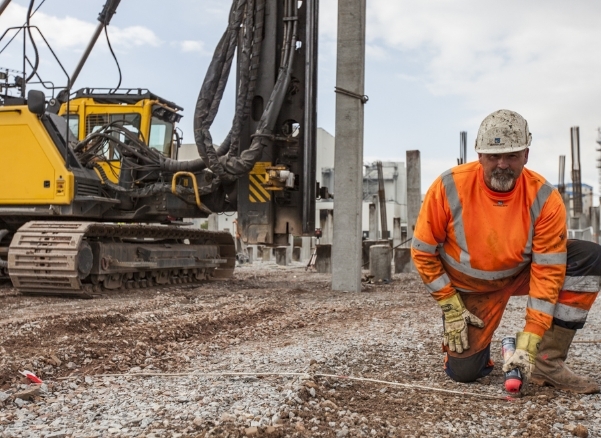
Building piling refers to the process of installing long, slender columns, called piles, into the ground to transfer a structure’s load to a deeper, more stable layer of soil or rock. This is especially crucial when the upper soil layers are too weak or inconsistent to support the structure alone. Piles can be made from concrete, steel, or timber and are typically driven, drilled, or jacked into place.
The primary objective of piling is to bypass unsuitable ground and reach soil or bedrock layers that can bear the weight of the structure. It is a foundational element in the construction industry, particularly for commercial projects on reclaimed or soft land.
Types of Building Piles
There are various types of piles used in construction, each selected based on the load requirements, soil conditions, and project scope. Some of the different types of building piles include:
- End-Bearing Piles – These piles rest on a strong soil or rock layer. The entire load of the structure is transferred through the pile to this solid stratum. They act like columns and are ideal when there is a hard layer deep below soft or loose soil.
- Friction Piles – Friction piles transfer the load of the structure through surface friction between the pile and the surrounding soil. These are used when no strong stratum is available at a reasonable depth.
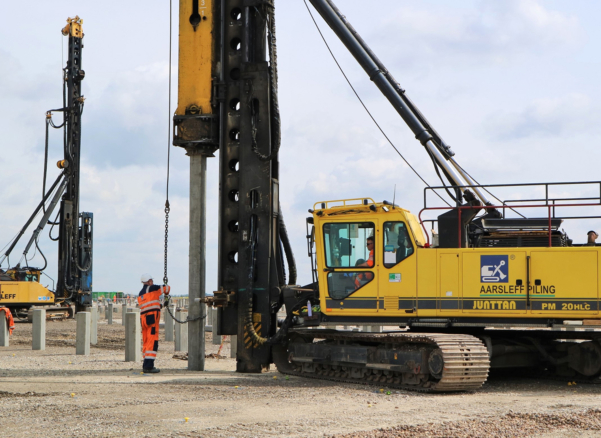
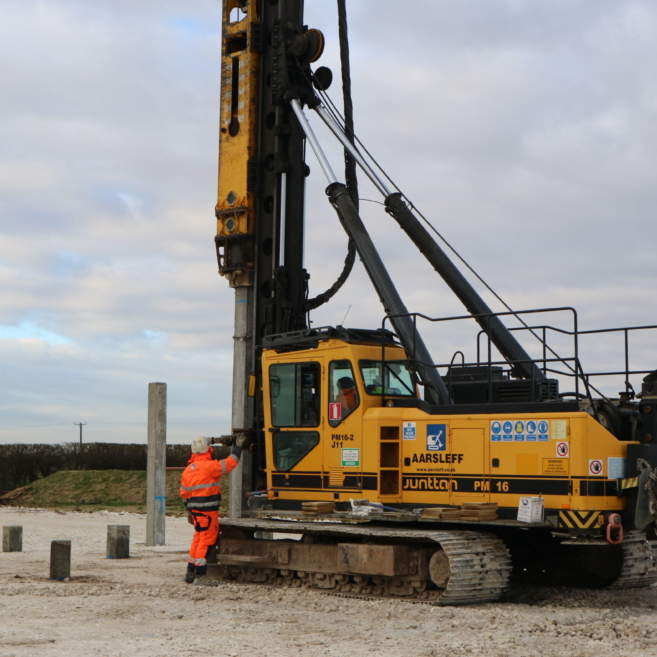
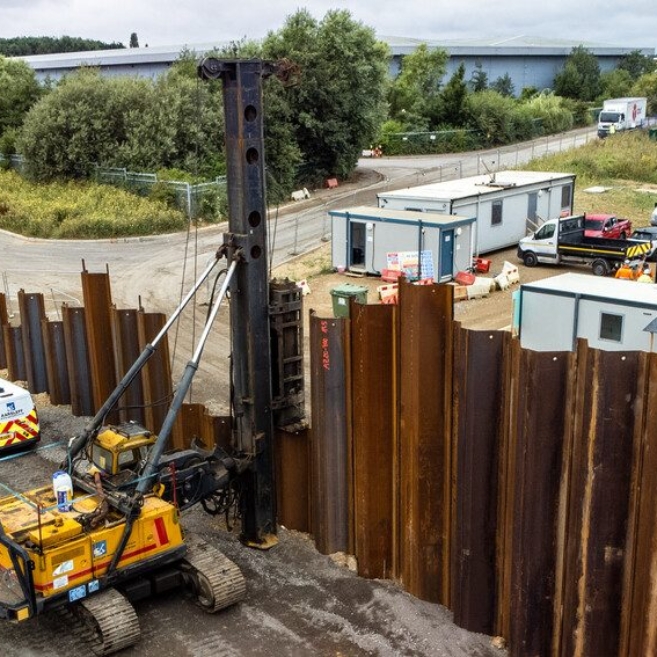
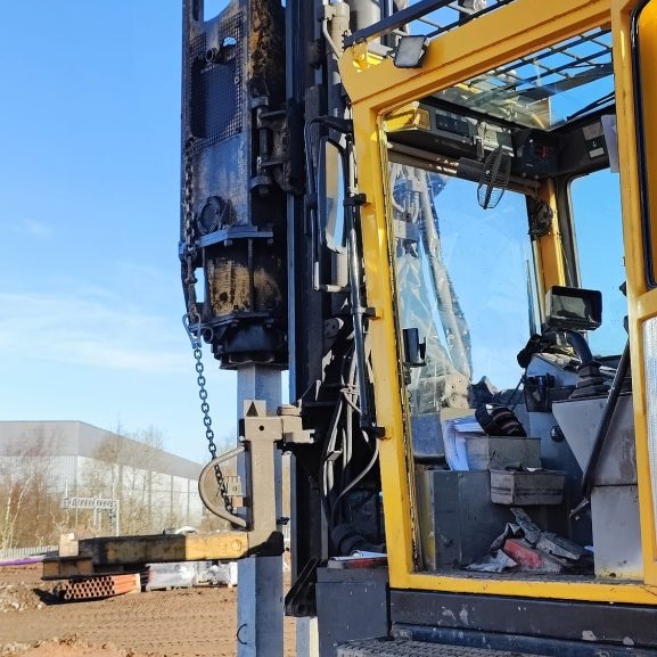
- Driven Piles – Pre-formed piles made of concrete, steel, or timber are driven into the ground using a pile driver or piling rig. These are suitable for many soil types and offer excellent load-bearing capacity. Sheet piles are also a type of driven pile, which are designed to interlock with each other.
- Bored Piles (Drilled Piles) – A hole is drilled into the ground and filled with reinforced concrete. Bored piles are less disruptive in urban environments and are suitable for larger loads.
- Screw Piles (Helical Piles) – These piles are screwed into the ground using a helical blade. They are quick to install and ideal for temporary or light structures.
- Mini Piles (Micro Piles) – Used in restricted access areas or where low vibration is required, mini piles are a smaller alternative to traditional piling systems, often used in foundation retrofitting.
Applications of Building Piling
In the commercial sector, piling is a versatile method used for a wide array of construction projects. Some of its primary applications include:
- High-rise buildings and skyscrapers
- Office blocks
- Retail units
- Shopping centres
- Hotels and resorts
- University accommodation
- Healthcare facilities
- Distribution warehouses
- Factories
- Logistics hubs
- Data centres
- Tech facilities
Installation Methods
The method of pile installation depends on the type of pile, soil condition, and site requirements. Common techniques include:
- Driven Installation – Using a pile driver, pre-formed piles are hammered or vibrated into the ground. This method is fast and offers immediate load-bearing capacity.
- Bored or Drilled Installation – This involves drilling a hole and filling it with concrete and reinforcement. It is quieter and creates less vibration, making it ideal for urban or sensitive sites.
- Continuous Flight Auger (CFA) – A continuous auger drills into the ground, and concrete is pumped through the hollow stem as the auger is withdrawn. Reinforcement is inserted into the wet concrete afterwards. This technique is known as Continuous Flight Auger (CFA) piling.
- Jacked Piles – These are pressed into the ground using hydraulic jacks. This method produces minimal noise and vibration and is ideal for work near existing buildings.
Each installation method has its own set of advantages and challenges. Selecting the right one ensures structural safety and cost-effectiveness.
Design Considerations
Before implementing a piling solution, engineers must assess several design considerations to ensure the system is effective and safe:
- Soil Conditions – Soil testing is fundamental. Engineers conduct geotechnical surveys to evaluate soil type, density, and strength at various depths.
- Load Requirements – The type, size, and arrangement of piles depend on the load the foundation must support, both the weight of the structure and additional dynamic forces such as wind and seismic activity.
- Pile Material – Concrete, steel, and timber each have specific strengths, costs, and longevity. The choice depends on environmental exposure and structural demands.
Site Constraints – Limited access, urban environments, or nearby structures may influence the choice of piling method and machinery. - Environmental Impact – Noise, vibration, and ground movement must be minimised, especially in sensitive or densely populated areas.
Designing the right piling system is critical to the success of any foundations building project.
Overview of Building Piling Works
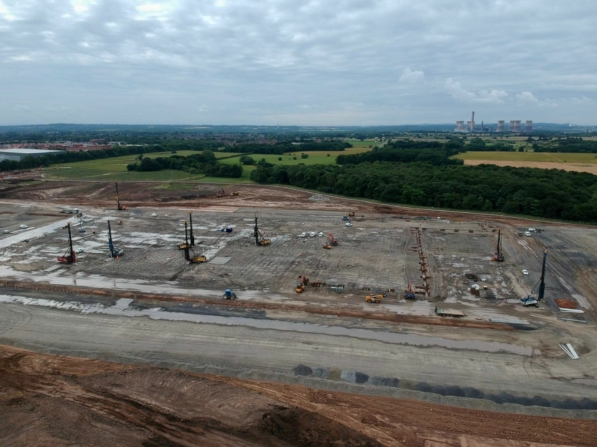
Aarsleff worked for Bowmer and Kirkland to construct a large-scale piling job for commercial sheds in St Helens, North West England. At the time, this was the largest piling job Aarsleff had completed in the past 10 years.
This job consisted of 14,558 precast reinforced concrete piles and 8 Junttan PM20/22 Rigs. The piles were manufactured by sister company, Centrum Pile Ltd, at their state-of-the-art facility in Newark, Nottinghamshire.
Our main challenge on-site was the logistics. With 8 piling rigs and over 14,000 piles to be installed in a tender programme of 18 weeks, our team’s focus had to be on schedule. Hard work was put in by the site team, meaning that, despite delays, timelines created at the tender stage were met and even surpassed.
To read about the project in more detail, see our case study.
Why Partner with Aarsleff for Building Piling?
Aarsleff is a leader in ground engineering and piling solutions for the commercial sector across the UK. With decades of experience, we provide end-to-end piling services for building projects of all sizes and complexities.
Our team includes industry-leading engineers, project managers, and technicians who understand every nuance of foundations building and piling. We also employ state-of-the-art machinery and specialist methods tailored to your project’s specific needs.
For environmentally conscious projects, we’re committed to minimising environmental impact. Our low-vibration, noise-reducing technologies make us the preferred choice in sensitive urban environments.
Whether you’re embarking on a large warehouse development or a smaller office build, choosing Aarsleff Ground Engineering means partnering with a team that’s driven by operational excellence, value engineering, and sustainability.
Close