What Are Steel Bearing Piles?
Table of Contents
- About Steel Bearing Piles
- Applications of Steel Bearing Piles
- How Are Steel Bearing Piles Installed?
- Advantages of Steel Bearing Piles
Last updated
23 September 2025
About Steel Bearing Piles
Steel bearing piles, also known as driven steel piles or steel tubular piles, are deep foundation solutions for projects requiring high capacities. They are most commonly employed in civil engineering structures, such as road bridges and marine structures. Their high axial, lateral, and tensile load capacities make them a choice solution. [1]
Comprised of recycled oil & gas drilling cases, driven steel piles are high-grade thick wall steel tubes for sites with minor obstructions and/or sites with vibration issues for surrounding structures. Ranging from 140 to 339mm, driven steel piles are manufactured of a high grade of steel that lends itself very well to being driven into the ground for bearing piles. They can be supplied as a single length, or in sections depending on the project requirements. The piles are robust and can withstand high driving stresses which assists with overcoming very dense bands or obstructions.

Applications of Steel Bearing Piles
Steel bearing piles are versatile and have been employed across various applications such as:
- Infrastructure – Providing foundational support for bridges, tunnels, and highways, ensuring longevity and resilience.
- Energy – Supporting structures in wind farms, power stations, and other energy facilities.
- Commercial – Laying the groundwork for commercial buildings, warehouses, and retail centres, facilitating rapid construction timelines.
- Marine – Utilised in quay and jetty constructions, as well as coastal protection projects, demonstrating resilience in challenging marine environments.
- Heritage – Utilised in heritage settings due to low-vibration needs in underpinning old foundations, supporting new loads and transferring weight.
How Are Steel Bearing Piles Installed?
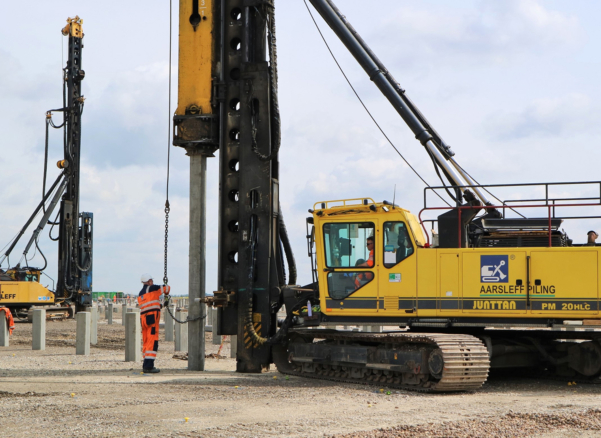
The installation of steel bearing piles involves driving them into the ground using specialised piling machinery and equipment. Here is how steel bearing piles are generally installed:
- Site Preparation – The ground is assessed, and necessary preparations are made to ensure a stable installation environment.
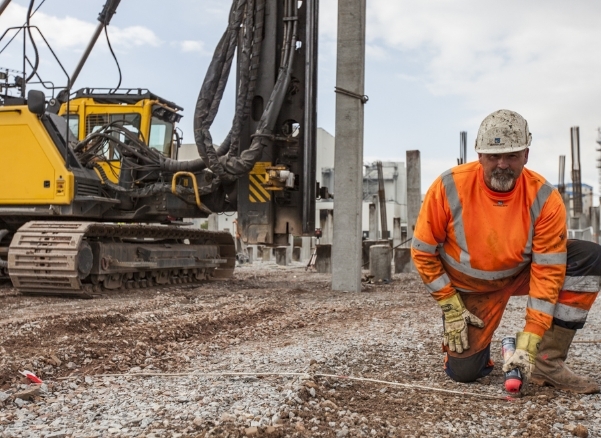
- Pile Positioning – The steel piles are positioned at the designated location with precision.
- Driving Process – A pile driver equipped with a hydraulic or vibratory hammer drives the piles into the soil to the required depth.
- Monitoring and Adjustments – Engineers monitor the installation process and make any necessary adjustments to ensure proper depth and load-bearing capacity.
- Final Inspection – Once installed, the steel piles undergo a final inspection to verify their integrity.
Advantages of Steel Bearing Piles
The main advantages of using steel bearing piles are:
- They can be mixed and matched with precast concrete piles for a commercially beneficial solution
- Suitable for uncertain ground conditions
- They can be driven deeper than precast piles to depths of 50 meters or more
- They are easy to adapt to unforeseen soil conditions, along with being able to be driven through small obstructions and hard ground conditions
- They can be driven using minimal vibration driving methods
- Fast construction allows for immediate follow-up on work to begin meaning no delays to site activities
- No spoils arise from installation, which is particularly important on brownfield or contaminated sites
- No overdesign as the individual pile sizes are dictated by the load capacity required and not by the machinery employed

Written by Aarsleff UK
23 September 2025
Aarsleff Ground Engineering is a leading sheet piling supplier and contractor. We specialise in designing and delivering sheet piling solutions across the UK.

Reviewed by Mark Fuller, Piling Director
17 February 2025
Mark Fuller is the Piling Director at Aarsleff Ground Engineering. He has amassed a wealth of experience and knowledge within the specialist piling and ground engineering industry throughout his 20 years of experience in the industry. Mark is directly responsible for the overall driven piling within the business, including technical and operational management of awarded contracts, development of strategic long-term plans and planning of recruitment and resource.
Close