About Vibro Piling
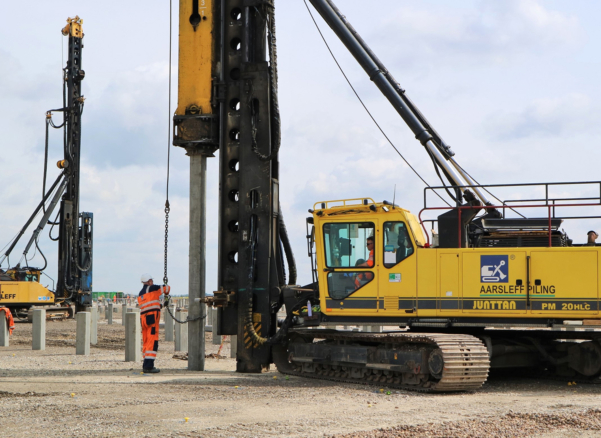
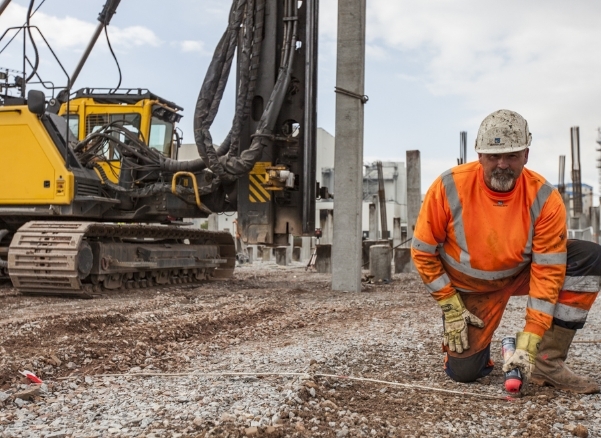
Vibro piling is a specialist foundation-laying technique that avoids the use of traditional piling equipment, such as impact drivers or drills. Instead, it uses equipment such as a vibro hammer or vibro tamper to drive piles or compact soil, creating a stable base for construction work.
Vibro piling is used to install steel, precast concrete, or stone vibro piles or to form vibro stone columns, which replace weak soil with compacted stone to enhance load-bearing capacity. This significantly improves the ground’s performance without the need for deep excavation, as vibro piling reduces soil voids and improves density.
This piling method produces less noise and environmental impact compared to other methods, making it ideal for sensitive locations and urban areas.
Common Vibro Piling Projects
Vibro piling is used across a wide variety of sectors due to its versatility and efficiency. Common applications include:
- Commercial developments – Providing stable foundations for offices, retail parks, warehousing and more, with quick installation and minimal disruption.
- Infrastructure – Vibro compaction can prepare large areas of ground for heavy loads – useful in rail projects, embankments and more.
- Marine works – Vibro piling is useful in waterfront works where soil densification and vibration control are required.
- Ground improvement – The installation of vibro stone columns to replace soft soils can improve strength and drainage.
- Residential housing – Supporting low to medium-rise buildings, especially where sites have variable or weak soils.
Vibro piling also allows for adaptation to the specific demands of a project, such as densifying loose areas or installing structural piles.
How Does Vibro Piling Work?
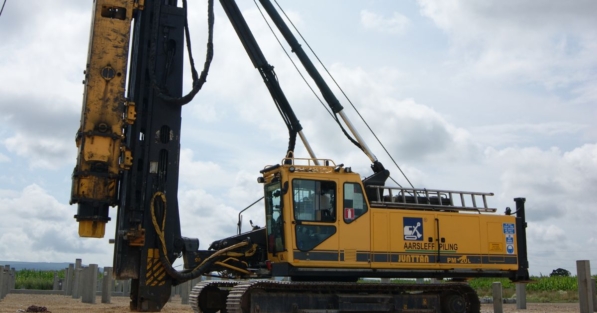
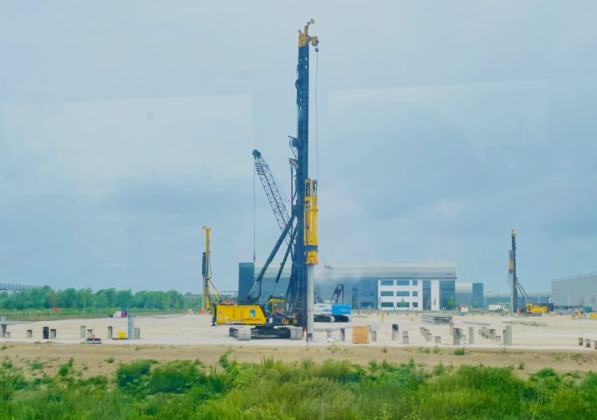
Following standard site assessments to determine the appropriate equipment and techniques, a vibro hammer or tamper is attached to a crane or rig. This device generates high-frequency vibrations, which reduce the friction between soil particles. This allows either the insertion of a pile or the direct compaction of the soil.
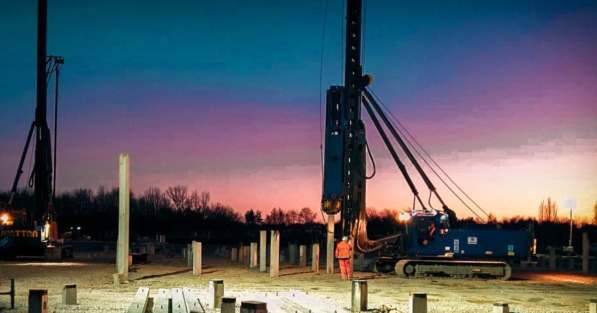
The chosen material, such as steel tubing, pre-cast concrete, or stone column casings, is positioned and vibrated into the ground. Vibro compaction, in particular, applies the vibration directly to the soil, which is highly effective in sands and gravels to enhance bearing capacity and reduce settlement.
How are Vibro Stone Columns Installed?
Vibro stone columns are a type of vibro piling that replaces weak soil with compacted stone. This improves the load-bearing capacity and drainage of the soil, but it is dependent on ground conditions, site constraints, and environmental factors. Once a cavity has been created in the ground through vibration, it’s filled and compacted with graded aggregate using either top feed or bottom feed installation.
Top feed installation involves driving the vibrating tool into the ground to the necessary depth. Stone is then fed from the surface while the tool is repeatedly raised and lowered, compacting the material in layers as it builds from the base. This is generally used where soils are self-supporting and groundwater is low.
Bottom feed installation involves a delivery pipe that carries stone down to the base. The vibrating tool remains in the ground, discharging stone directly where it is needed. This method is used in loose or unstable soils as it prevents the collapse of column sides and reduces soil contamination risks.
What are Vibro Piles Made From?
Vibro piles are manufactured from a range of materials, dependent on the needs of the project:
Steel is often used where high load capacity is required, in the form of tubular piles, H-section piles, and at times steel sheets. They can be vibrated into position with precision, making them ideal for sites with limited access, and are particularly suited for marine environments, as the metal can be coated or treated for improved corrosion resistance.
Concrete vibro piles are common in the residential and commercial sectors where uniformity and long-term durability are a priority. As they are pre-cast, they have predictable dimensions and load performance, which makes them a reliable choice for repetitive foundations.
Stone vibro piles are commonly referred to as vibro stone columns, which are predominantly used in ground improvement rather than as a structural pile.
Soil Types for Vibro Piling
Vibro piling is particularly effective in granular soils, as vibration encourages particles to settle into denser formations. However, it can still be installed using displacement techniques in cohesive soils like clay. Some of the best soil types include:
- Sands and gravels – Ideal for both compaction and stone columns for use in commercial or infrastructure projects.
- Mixed granular soils – Sites can benefit from both compaction and partial replacement techniques, improving ground performance.
- Made ground – Made ground often has irregular compaction and poor load-bearing capacity, with vibro piling able to provide a stable base for new construction.
Advantages of Vibro Piling
Vibro piling offers several advantages over conventional piling and ground improvement techniques by combining soil enhancement with structural pile installation. Key benefits include:
- Addressing both bearing capacity and settlement concerns in a single process.
Minimising noise and vibration, resulting in lower disturbance than traditional driven piles. - Increasing cost efficiency through faster installation and reduced material requirements.
- Being suitable for a wide variety of soils and project types.
- Enabling sustainable use of site-won aggregate in stone column applications.
In addition to these practical benefits, vibro piling reduces the environmental impact of construction by minimising the need for extensive excavations or deep soil replacement. At Aarsleff, we are committed to environmental responsibility, with sustainability embedded in every project we undertake.

Written by Aarsleff UK
1 May 2026
Aarsleff Ground Engineering is a leading sheet piling supplier and contractor. We specialise in designing and delivering sheet piling solutions across the UK.

Reviewed by Mark Fuller, Piling Director
29 April 2026
Mark Fuller is the Piling Director at Aarsleff Ground Engineering. He has amassed a wealth of experience and knowledge within the specialist piling and ground engineering industry throughout his 20 years of experience in the industry. Mark is directly responsible for the overall driven piling within the business, including technical and operational management of awarded contracts, development of strategic long-term plans and planning of recruitment and resource.
Close