Pile Testing
What is Pile Testing?
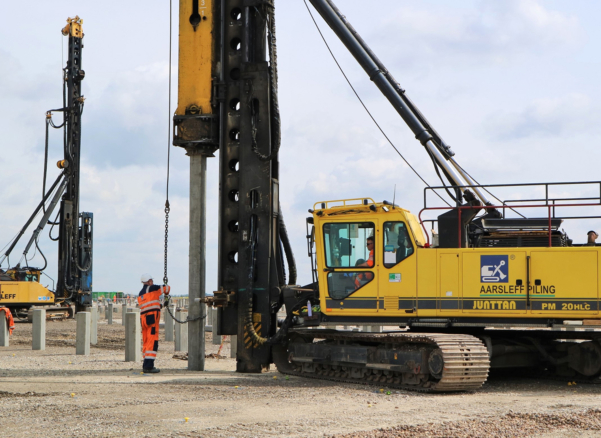
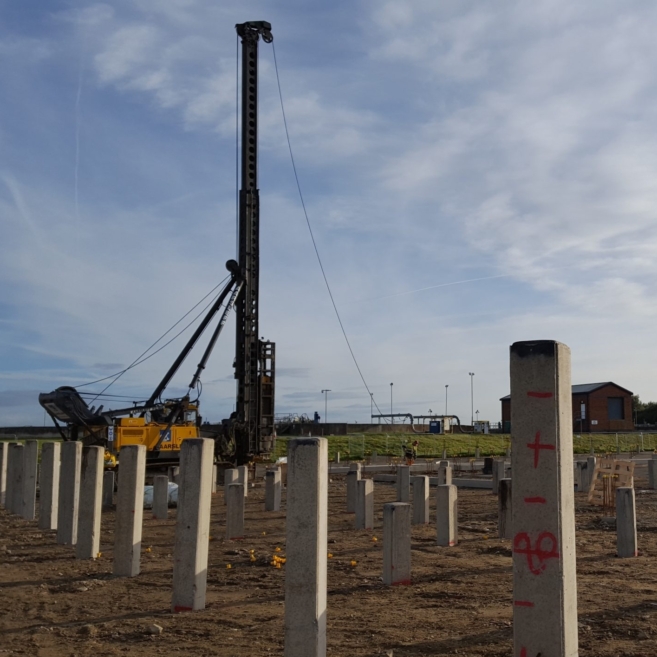
Pile testing is a method used in construction to assess the integrity and load-bearing capabilities of foundation piles, which are deep structural elements that transfer building loads down to stronger soil layers or rock found below weaker surface layers. These deep foundations are essential for supporting structures such as skyscrapers, bridges, and other large-scale buildings, especially in areas with unstable or weak soil.
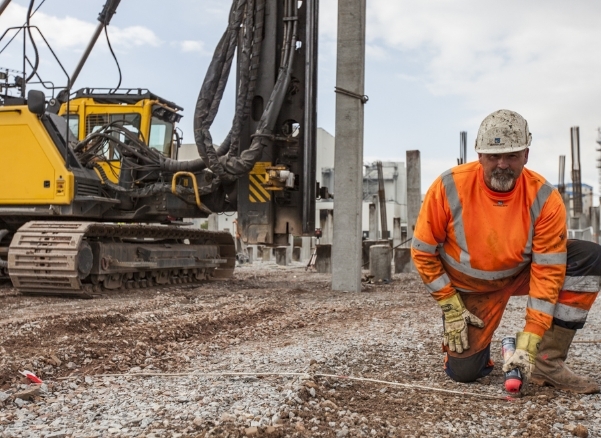
The purpose of pile testing is to ensure that the piles will perform as expected and safely bear the design loads. Tests are typically performed both during installation and after the piles are installed.
Pile Testing Methods
There are several methods used to test piles, with the most common being Dynamic Load Testing, Static Load Testing, and Pile Integrity Testing. Each method provides different insights into the pile’s performance and suitability.
- Static Load Testing – The most common type of pile testing, it involves gradually applying a controlled load to a pile and measuring its movement or settlement response. This test assesses the pile’s bearing capacity and overall structural integrity under actual service conditions.
- Dynamic Load Testing – This method assesses the load-bearing capacity of piles, foundations, or structures by applying a dynamic force and measuring the response. This technique simulates real-life loading conditions through impacts or vibrations to ensure structures can handle their intended loads safely.
- Pile Integrity Testing – This method ensures that a pile cast into the ground is a uniform column of concrete. It can be used to check if there are any horizontal cracks, inclusions or “necking” of the pile, which might mean it is too weak to support its load.
The choice of method depends on various factors, including project requirements, site conditions and testing objectives.
Instrumentation
Pile testing instrumentation is essential in assessing the structural integrity and load capacity of piles. Commonly used tools include pile integrity testers, strain gauges, load cells and settlement gauges.
Pile integrity testers assess concrete quality and continuity. Strain gauges measure deformation or strain of the piles under load, while load cells evaluate the actual bearing capacity, and settlement gauges track vertical movements of the pile.

Advantages
The advantages of pile testing include:
- Quality Assurance – Ensures that the piles meet the specified standards for strength, integrity, and load capacity, essential for supporting structures safely.
- Improved Safety – Helps identify potential problems or failures in pile performance, improving safety and reducing the risk of structural failure.
- Cost Efficient – Identifying defects or non-conformance early through testing allows for corrections before further construction, thereby helping avoid more significant, costly repairs at later stages.
Why Choose Aarsleff?
Aarsleff Ground Engineering is the UK trading arm of Danish contracting giant
Per Aarsleff A/S. As part of our operations, we complete pile testing for construction projects in different market sectors across the UK.
Other reasons for choosing Aarsleff include:
Expertise – We’re one of the UK’s leading piling and geotechnical design and installation specialist contractors with over 30 years of experience.
In-House Team – All pile load tests are carried out by our in-house team of test engineers.
Value Engineering – We actively ensure each scheme can be value engineered to give clients the best service, quality design, safety and value.

Case Studies
Click on a project to read the full case study.


Our Piling Services
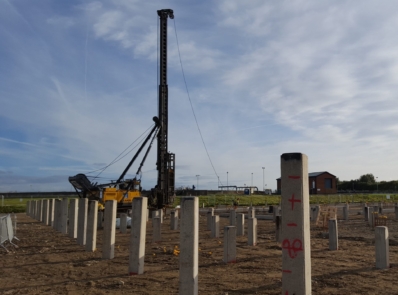
Along with pile testing, we offer a wide range of piling services, including:


Close