What Are Caissons and Caisson Foundations?
Table of Contents
- Caisson Foundations and Their Purpose
- Main Types of Caisson Foundations
- How Caisson Construction Proceeds
- Where Caisson Foundations Are Used
- Design Factors and Structural Behaviour
- Advantages of Caisson Foundation Systems
Last updated
22 September 2026
Caisson Foundations and Their Purpose
A caisson is a large, deep foundation structure used to transfer structural loads to stronger ground or rock where shallow foundations are unsuitable. Caissons are commonly used beneath bridges, marine structures, offshore infrastructure and other heavily loaded projects where water, weak soils or difficult ground conditions make conventional foundations impractical.
In foundation engineering, the term covers several systems rather than one fixed shape. A caisson can be a hollow reinforced concrete unit sunk into the ground, a prefabricated box positioned on a prepared bed or a cylindrical shaft drilled and filled with concrete. Intended use, geology and construction access determine the arrangement.
Terminology varies between regions. Some specifications use the term caisson for a large drilled shaft, while others reserve it for a hollow unit that is sunk by excavating from within. Clear design documentation identifies the type of caisson, material, founding level and installation method.
Main Types of Caisson Foundations
Several types of caisson foundation are used across foundation and marine construction:
- Open caissons have open tops and bases. Workers or mechanical equipment excavate material from within the shaft, allowing the unit to descend progressively. A cutting edge assists penetration, and the base is sealed after the required level has been reached.
- A box caisson has a closed base and is usually constructed in a controlled facility. The unit can float during transport before it is lowered onto a prepared riverbed or seabed and sunk into place by controlled ballasting.
- A pneumatic caisson contains a sealed working chamber near its base. Compressed air restricts water entry so excavation can continue in wet ground, although pressure exposure and access create specialist health and safety requirements.
- A drilled caisson is a large-diameter bored shaft formed by boring into soil or rock. Reinforcement is inserted before the excavation is filled with concrete, creating a cast-in-place structural element.
- Suction caissons are skirted steel units used in suitable seabed soils. A controlled pressure difference assists penetration and helps form an offshore foundation or anchor.
The term floating caissons refers to box-shaped units that are buoyant during transport. They are not left floating in service; once positioned, they are lowered onto their prepared foundation. Concrete caissons and steel systems can therefore belong to different categories according to their form and installation method.
How Caisson Construction Proceeds
The construction process begins with ground investigation, structural design and selection of a suitable system. Boreholes, laboratory testing and marine surveys can establish soil strength, groundwater, bedrock level, seabed profile and possible obstructions. Designers then set dimensions, founding criteria, reinforcement and construction-stage controls.
For an open caisson, the initial section is built around a cutting edge. As teams excavate from inside, self-weight helps the unit descend. Further wall sections may be added above, and survey checks track position and verticality. At the founding level, the base can be cleaned, sealed and filled to create the required permanent arrangement.
Box units follow another sequence. Contractors may prefabricate the structure in a dry dock or casting basin, launch it, tow it to site and lower it onto a prepared bed. Ballasting, marine conditions and temporary stability require close control while the caisson is sunk into place.
Drilled caissons are typically constructed using rotary drilling equipment to form a cylindrical bore. Temporary casing or drilling support fluid may stabilise the excavation where necessary. After cleaning and inspection, a reinforcement cage is placed, and concrete is installed using a method suited to groundwater and bore stability.
Pneumatic construction adds an access shaft, air locks and a pressurised working chamber. Because personnel may work under compressed air, this method requires specialist procedures and is considered only where its technical case is justified.
Where Caisson Foundations Are Used
Caissons are suited to projects that combine high loads with difficult access, deep water or variable near-surface ground. Examples of caisson applications include:
- Bridge pier foundations within rivers, estuaries or navigation channels;
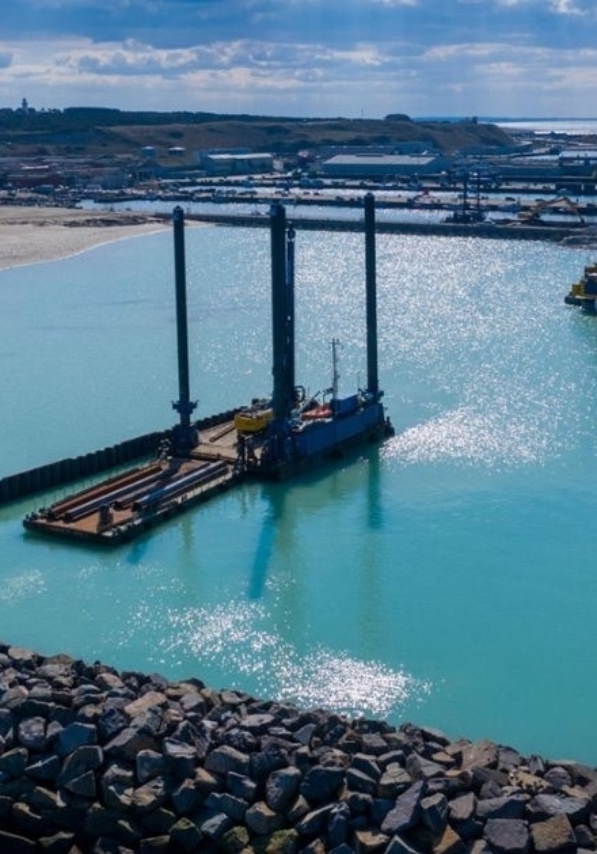
- Quay walls, dock structures, breakwaters and marine terminals;
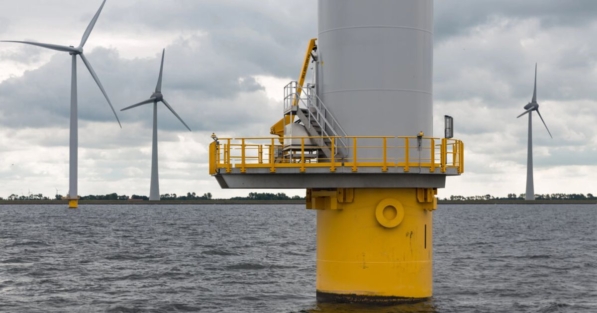
- Offshore energy foundations, anchors and selected platform structures;
- Deep shafts and major substructures for rail or infrastructure schemes;
- Waterfront buildings and other heavily loaded structures near water.
Underwater foundations often need a method that limits dependence on a large open excavation. A caisson can provide both temporary support during installation and part of the permanent load path. However, some schemes still use cofferdams to create a protected work area around a foundation or to support adjacent construction.
Marine construction places additional demands on planning. Tides, waves, currents, navigation, scour and environmental restrictions may influence when and how a unit is installed. A prefabricated caisson also needs a viable float-out route between its fabrication area and final location.
Historic foundations may combine caissons with a masonry pier or abutment. Modern caisson construction more often uses reinforced concrete or fabricated steel, with the selected material responding to structural demand, exposure and installation requirements.
Design Factors and Structural Behaviour
Foundation performance depends on more than depth. Designers assess end bearing, shaft resistance, settlement and lateral response, together with uplift, overturning and construction-stage loading. A caisson supporting a bridge pier may also need to resist current, debris, vessel collision or braking forces transferred from the deck.
Ground conditions influence every stage. Weak deposits can offer limited support during sinking, while dense layers, boulders or sloping bedrock may obstruct penetration. Uneven excavation can cause tilt; conversely, high wall friction may prevent an open unit from descending as intended. The design should provide monitoring criteria and planned corrective measures.
For box foundations, bearing-surface preparation affects alignment and load distribution. Scour protection may be needed where flowing water can remove material around the base. Floating stability must also be checked during launch, towing and lowering, before the permanent condition has been established.
Material selection reflects exposure and structural demand. Reinforced concrete needs suitable cover, joint detailing and durability provisions, particularly in tidal or chemically aggressive water. Steel caisson technology requires corrosion protection and fabrication details that account for lifting, transport and installation stresses.
Advantages of Caisson Foundation Systems
The principal advantages of caisson foundations arise where a substantial structure must reach reliable ground beneath water or weak deposits. Depending on the selected system, they can:
- Support high vertical loads and significant lateral actions;
- Provide a large, stiff foundation beneath piers or marine structures;
- Reduce the extent of open excavation and associated dewatering;
- Combine temporary construction functions with the permanent works;
- Allow prefabrication where site space or marine access favours off-site production.
Those benefits must be weighed against project constraints. Caisson construction can require specialist plants, marine logistics, temporary works and close survey control. Obstructions, uncontrolled water entry, loss of verticality or an unsuitable bearing surface can complicate installation. Pneumatic methods add pressure-related risks, while floated units depend on safe transport and weather conditions.
Inspection and verification should follow the selected method. Records may cover depth, position, inclination, excavation progress, concrete placement, ballast, towing conditions or drilling response. Founding surfaces and completed materials require checks against specified acceptance criteria.
A well-selected caisson foundation brings structural design, geotechnical assessment and buildability into one coordinated system. Its value lies not in depth alone, but in providing a controlled route from the supported structure to dependable foundation material under conditions where simpler foundations may not be practical.
Successful caisson construction brings several disciplines together: geotechnical interpretation, structural design, temporary works, marine planning and controlled installation. When those elements are coordinated, the selected system can provide a stable foundation or permanent enclosure in conditions where conventional open excavation would be difficult to manage.

Written by Aarsleff UK
22 September 2026
Aarsleff Ground Engineering is a leading sheet piling supplier and contractor. We specialise in designing and delivering sheet piling solutions across the UK.

Reviewed by Mark Fuller, Piling Director
22 July 2026
Mark Fuller is the Piling Director at Aarsleff Ground Engineering. He has amassed a wealth of experience and knowledge within the specialist piling and ground engineering industry throughout his 20 years of experience in the industry. Mark is directly responsible for the overall driven piling within the business, including technical and operational management of awarded contracts, development of strategic long-term plans and planning of recruitment and resource.
Close