What Are Ring Beam Foundations?
Table of Contents
- Definition and Structural Function
- Ground Conditions and Foundation Suitability
- Concrete Ring Beam Foundation Systems
- Steel Ring Beam Foundation Arrangements
- Relationship Between Ring Beams and Piling
- Installation and Construction Procedures
- Structural Role Within Ground Engineering
Last updated
6 July 2026
Definition and Structural Function
Ring beam foundations are structural support systems designed to distribute loads around a continuous perimeter. These foundations form a connected beam arrangement, transferring structural forces evenly across supporting ground or piled elements.
Ring beams are commonly associated with circular, curved, or perimeter-based structures in which continuous load distribution is integral to the engineering design. In some developments, ring beam systems also provide restraint against lateral movement and differential settlement.
Within ground engineering projects, ring beam foundations may be combined with piling systems, retaining walls, or reinforced slab arrangements, depending on site conditions and structural requirements.
Concrete and steel configurations are both used across modern construction projects, with selection influenced by loading criteria, durability requirements, and construction sequencing.
Ground Conditions and Foundation Suitability
Ring beam foundations are commonly specified when structural loads require controlled distribution across varying ground conditions. Weak surface soils, made ground, or areas at risk of settlement may influence foundation selection during early design development.
Where shallow support alone cannot provide adequate bearing performance, piling ring beam foundations may be introduced to transfer loads into deeper strata.
This foundation arrangement may also be considered where:
- Structures require perimeter load support
- Retaining walls interact with foundation systems
- Settlement management influences design
- Ground variability exists across site areas
- Circular or curved structures are proposed
Site investigation data remains important throughout foundation planning and engineering assessment.
Concrete Ring Beam Foundation Systems
Concrete ring beam foundations are commonly formed by casting reinforced concrete in situ around a structural footprint. Reinforcement placement assists with bending resistance, shear performance, and load continuity throughout the foundation system.
These foundations are often integrated with:
- Reinforced slabs
- Ground beams
- Retaining structures
- Piled support arrangements
Concrete ring beam systems may vary in depth, width, and reinforcement configuration depending on structural loading and ground behaviour.
In some applications, thickened sections are introduced beneath heavily loaded zones or connection points where concentrated forces occur.
Controlled concrete placement and accurate reinforcement positioning remain important during installation.
Steel Ring Beam Foundation Arrangements
Steel ring beam foundations provide an alternative structural solution when reduced construction weight or faster installation sequencing is part of the project requirements.
Fabricated steel sections may be connected to piled supports, reinforced pads, or structural frames, depending on foundation design criteria.
Steel ring beam foundations are regularly associated with:
- Industrial developments
- Modular construction systems
- Temporary structures
- Marine installations
- Circular storage tanks
Protective treatments may also be introduced to improve durability where ground moisture or environmental exposure affects long-term structural performance.
Connection detailing remains an important consideration throughout fabrication and installation stages.
Relationship Between Ring Beams and Piling
Piling ring beam foundations combine deep foundation systems with continuous perimeter beams to improve load transfer performance across difficult ground conditions.
In this arrangement, piles transfer structural forces into deeper bearing strata while ring beams distribute those loads horizontally around the structure.
This approach is commonly selected where:
- Surface soils provide inconsistent support
- Ground movement requires management
- Structural loads remain concentrated
- Waterfront or marine conditions affect stability
- Retaining walls interact with foundation zones
Accurate positioning between piling works and ring beam installation remains essential during construction.
Engineering tolerances, pile alignment, and reinforcement continuity all influence structural performance across completed systems.
Installation and Construction Procedures
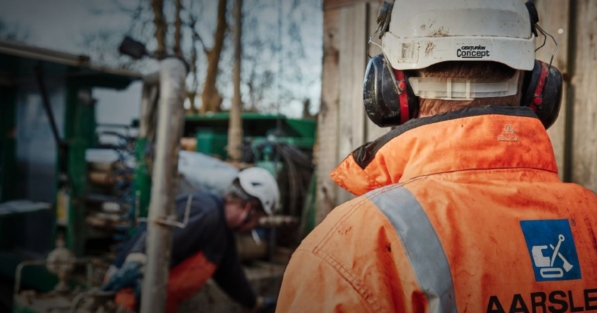
Construction of ring beam foundations generally follows excavation and ground preparation works. Foundation layouts are established before the installation of reinforcement, shuttering, or structural steel begins.
Depending on project requirements, installation procedures may involve staged construction sequences linked with piling operations, retaining wall installation, or reinforced slab construction.
Typical activities can include:
- Ground preparation and excavation
- Reinforcement placement
- Pile installation where required
- Concrete pouring or steel assembly
- Structural alignment checks
- Connection detailing and finishing works
Construction sequencing varies according to structural configuration, access restrictions, and site-specific engineering requirements.
Structural Role Within Ground Engineering
Ring beam foundations continue to support a wide range of developments across ground engineering and structural construction sectors. Their ability to distribute loads continuously around a structure provides stability where isolated foundations may not offer suitable performance.
From concrete ring beam foundations supporting retaining walls to steel ring beam foundations integrated with piled systems, these structural arrangements remain widely used across industrial, commercial, infrastructure, and marine construction projects.
Where settlement control, perimeter load transfer, and structural continuity influence foundation design, ring beam systems provide a practical and adaptable engineering solution.

Written by Aarsleff UK
6 July 2026
Aarsleff Ground Engineering is a leading sheet piling supplier and contractor. We specialise in designing and delivering sheet piling solutions across the UK.

Reviewed by Mark Fuller, Piling Director
14 May 2026
Mark Fuller is the Piling Director at Aarsleff Ground Engineering. He has amassed a wealth of experience and knowledge within the specialist piling and ground engineering industry throughout his 20 years of experience in the industry. Mark is directly responsible for the overall driven piling within the business, including technical and operational management of awarded contracts, development of strategic long-term plans and planning of recruitment and resource.
Close