What Are Piling Hammers?
Table of Contents
- Definition and Purpose of Piling Hammers
- How Piling Hammer Systems Operate?
- Hydraulic Systems Used in Foundation Works
- What Types of Piling Hammers Are Used in Construction?
- Ground Conditions and Installation Factors
- Site Constraints Affecting Installation
- Inspection Procedures During Piling Works
- Operational Challenges on Piling Projects
- Role of Piling Hammers in Modern Construction
Last updated
12 August 2026
Definition and Purpose of Piling Hammers
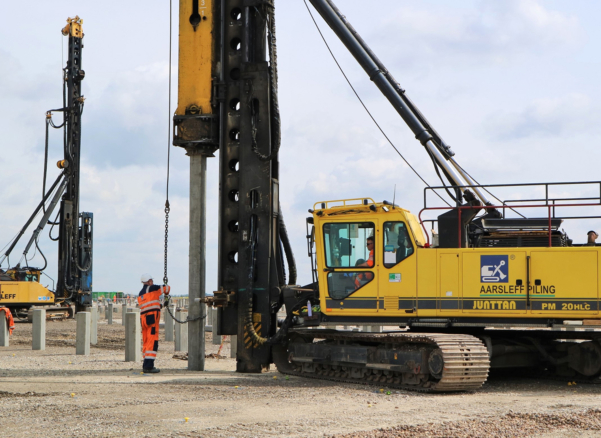
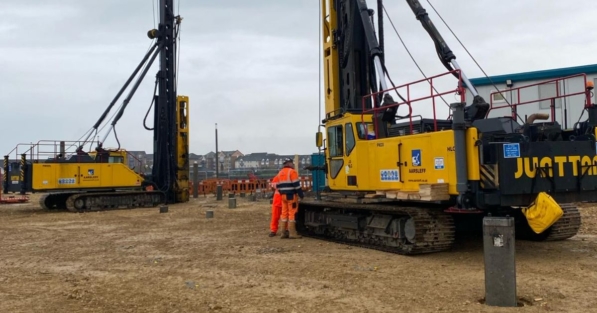
Piling hammers are mechanical systems used to install piles into the ground during foundation construction. They apply controlled force to drive structural elements through soil layers until the required bearing strata or design resistance levels are reached.
These systems support a wide range of piling operations across infrastructure, commercial, industrial, and residential developments. Selection depends on several project considerations, including pile material, soil composition, vibration limits, access restrictions, and structural loading requirements.
Different types of piling hammers deliver force through impact energy, hydraulic pressure, compressed air, or vibration. Each method affects installation behaviour in a different way.
In modern foundation engineering, hydraulic piling hammers remain widely specified due to their controllable operation and suitability for environmentally sensitive locations.
How Do Piling Hammer Systems Operate?
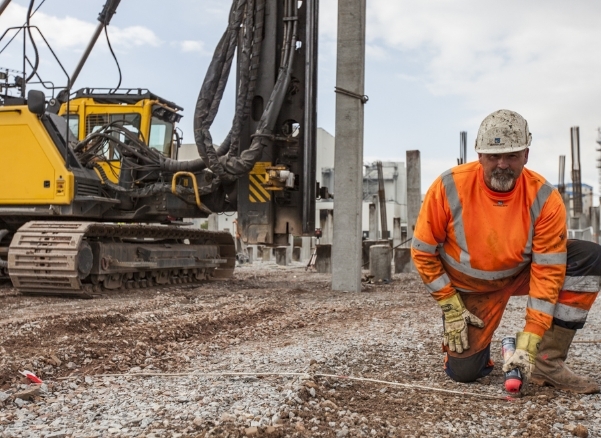
Pile installation begins once the positions have been surveyed and the piling equipment has been aligned with the structural layouts. The hammer mechanism then transfers energy directly onto the pile head, forcing the pile downward through varying soil formations.
Repeated striking or vibration gradually advances the pile into the ground. Resistance increases as denser strata are encountered, requiring adjustments to energy output or installation method.
Monitoring Systems May Record:
- Penetration rates
- Blow counts
- Alignment tolerances
- Installation depth
- Resistance changes during driving
Operational data assists engineers in assessing pile behaviour throughout installation.
Hydraulic Systems Used in Foundation Works
Hydraulic piling hammers generate force through pressurised hydraulic systems rather than internal combustion. This arrangement allows improved control over impact energy during installation.
These systems are frequently selected for projects where noise reduction and vibration management influence construction methodology. Urban developments, transport infrastructure, and restricted-access sites often require controlled installation methods to reduce disruption to surrounding structures.
Hydraulic Piling Hammers Can Be Used With:
Adjustable energy output also reduces the likelihood of damage to pile heads during driving operations.
What Types of Piling Hammers Are Used in Construction?
Several piling hammer configurations are used across foundation projects. Each system suits different ground conditions and structural requirements.
Hydraulic Impact Hammer Equipment
Hydraulic impact hammers operate through controlled vertical striking force. Their precision makes them suitable for projects requiring careful vibration management or accurate pile installation.
Energy settings can be modified to suit changing ground resistance during installation.
Diesel-Driven Hammer Systems
Diesel piling hammers generate force through combustion inside a cylindrical chamber. These systems are commonly associated with large infrastructure projects that require high-impact energy.
Although effective in dense formations, operational noise and exhaust emissions may limit use in built-up areas.
Vibratory Hammer Arrangements
Vibratory systems install piles through rapid oscillation rather than direct impact. Rotating eccentric weights reduces friction between pile surfaces and surrounding soil.
This method is regularly associated with:
- Sheet piling works
- Marine construction
- Temporary support systems
- Cofferdam installation
- Pile extraction operations
Granular ground conditions often respond more effectively to vibration-based installation methods.
Ground Conditions and Installation Factors
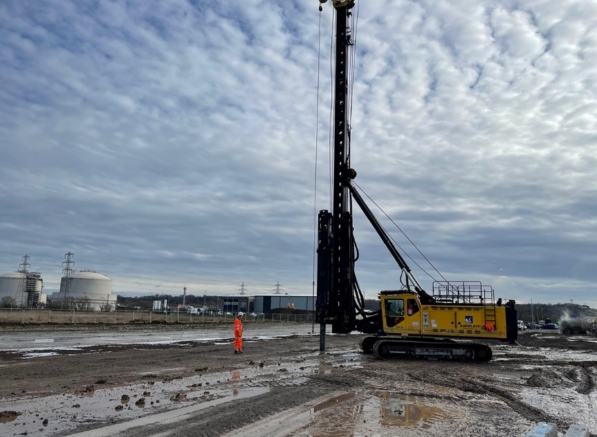
Soil conditions strongly influence hammer selection and installation efficiency. Ground investigation data provides essential information regarding bearing capacity, groundwater presence, obstruction frequency, and soil consistency.
Loose granular material may permit rapid penetration using vibratory systems. Dense gravel or compacted strata generally require greater impact energy.
Cohesive soils such as clay can increase resistance during driving, particularly where moisture content varies across site conditions.
Where unstable overburden or mixed geology creates installation difficulties, alternative piling methods may be introduced alongside piling hammer operations.
Site Constraints Affecting Installation
Foundation construction rarely takes place under uniform conditions. Several external factors influence piling operations and hammer selection.
Noise and Vibration Management
Urban projects often involve strict environmental limitations. Excessive vibration transfer may affect nearby structures, buried services, or transport infrastructure.
Hydraulic piling hammers are regularly chosen where quieter operation and improved control are required.
Restricted Working Areas
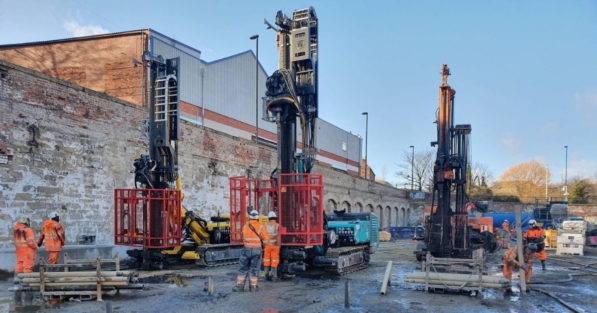
Limited site access can restrict rig size, lifting capacity, and hammer configuration. Compact piling rigs may therefore be paired with smaller hammer systems where overhead or boundary constraints exist.
Groundwater and Soil Stability
Water ingress and unstable formations can complicate installation procedures. Temporary casing systems or drilling-assisted methods may become necessary where unsupported excavations cannot maintain stability.
Inspection Procedures During Piling Works
Foundation installation normally includes ongoing quality verification throughout the construction sequence.
Inspection Procedures May Involve:
- Alignment checks
- Monitoring penetration resistance
- Recording installation depth
- Reviewing hammer performance
- Assessing pile integrity
- Confirming positional tolerances
Collected data supports compliance with structural design requirements and engineering specifications.
Testing requirements vary depending on project scale, pile type, and loading conditions.
Operational Challenges on Piling Projects
Several conditions can affect the performance of pile installation during foundation works.
Examples Include:
- Unexpected obstructions below ground
- Refusal within dense strata
- Excessive vibration transfer
- Ground movement near adjacent structures
- Misalignment during driving
- Variable soil consistency across the site
Careful sequencing and accurate ground investigation reduce operational uncertainty during installation.
Equipment selection also plays an important role in maintaining installation efficiency across changing site conditions.
Role of Piling Hammers in Modern Construction
Piling hammers continue to form a central part of foundation engineering across multiple construction sectors. Their ability to transfer structural loads into deeper bearing strata supports stability on projects ranging from residential developments to large-scale infrastructure works.
Advancements in hydraulic systems, vibration control technology, and installation monitoring have expanded operational flexibility within modern piling operations.
Hydraulic piling hammers, in particular, remain widely used where controlled installation, reduced environmental impact, and consistent driving performance are required across varying ground conditions.


Written by Aarsleff UK
12 August 2026
Aarsleff Ground Engineering is a leading sheet piling supplier and contractor. We specialise in designing and delivering sheet piling solutions across the UK.

Reviewed by Mark Fuller, Piling Director
14 May 2026
Mark Fuller is the Piling Director at Aarsleff Ground Engineering. He has amassed a wealth of experience and knowledge within the specialist piling and ground engineering industry throughout his 20 years of experience in the industry. Mark is directly responsible for the overall driven piling within the business, including technical and operational management of awarded contracts, development of strategic long-term plans and planning of recruitment and resource.
Close