ODEX Piling and Its Purpose
What is ODEX Piling?
ODEX piling refers to a specialist drilling method used to install piles through unstable or loose ground. The term stands for Overburden Drilling Eccentric, a system designed to advance casing while drilling and maintain bore stability throughout the process.
This technique allows an ODEX pile to be installed without collapse in difficult conditions. Combining drilling and casing in a single operation, it provides a controlled approach that conventional open-bore methods may struggle to achieve.
ODEX piling is widely associated with projects that require precision in variable soils, particularly where overburden sits above more competent strata.
Where is ODEX Piling Commonly Used?
ODEX piling is selected for sites where ground conditions present challenges to standard piling methods. Typical applications include:
- Urban construction – Suitable for confined sites where ground stability must be maintained during drilling.
- Infrastructure projects – Used in transport and utility works where mixed ground conditions are present.
- Slope stabilisation – Applied in areas requiring secure anchoring within unstable soils.
- Foundation works in overburden – Ideal where loose material overlays stronger ground layers.
- Marine and coastal projects – Effective in conditions where water-bearing soils require controlled casing.
This range shows how ODEX piles adapt to complex environments that demand stability during installation.
How ODEX Piling is Installed
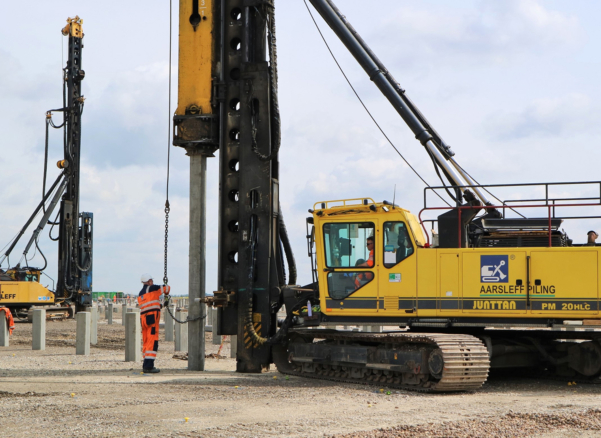
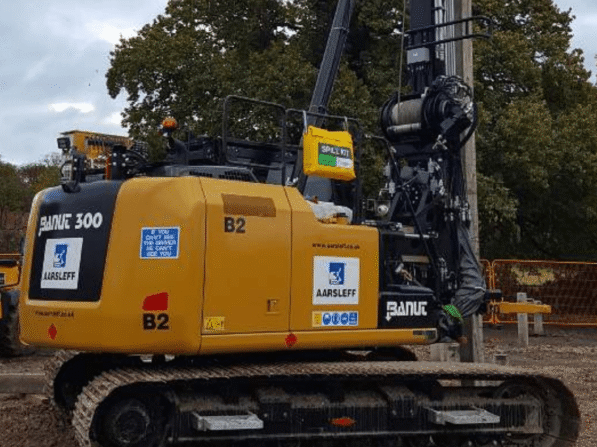
- ODEX piling begins with a drilling rig fitted with an eccentric reamer. As drilling progresses, the reamer expands outward, cutting a hole wider than the casing.
- The casing follows directly behind, advancing into the ground as drilling continues. This ensures the bore remains supported at all times, reducing the risk of collapse in loose or saturated soils.
- Once the required depth has been reached, the reamer retracts. Drilling may continue into the underlying strata if required. The completed bore, protected by casing, allows formation of an ODEX pile using grout or concrete.
The Mechanics Behind ODEX Installation
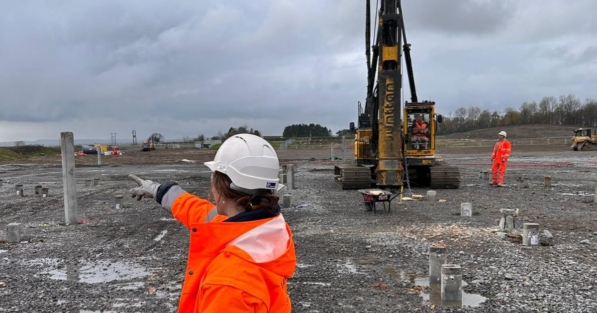
The defining feature of Overburden Drilling Eccentric systems lies in the expandable drilling head. This component opens during drilling, creating space for casing to advance, then retracts to allow withdrawal.
This sequence enables continuous support of the borehole. Soil and debris are flushed out during drilling, maintaining progress while preserving the integrity of the surrounding ground.
By combining these steps into a single operation, ODEX piling reduces the need for separate stabilisation measures often required in difficult conditions.
Materials Used in ODEX Piling
ODEX piles are typically formed using steel casing combined with grout or concrete. The casing provides immediate support during installation and may remain in place as part of the finished system.
Grout or concrete fills the internal void, forming a structural element capable of transferring loads. Reinforcement may be added as needed to meet design requirements.
Material selection depends on environmental conditions, load demands, and project specifications, ensuring each ODEX pile performs as intended.
Ground Conditions Suited to ODEX Methods
ODEX piling is particularly suited to ground where stability cannot be maintained using open drilling techniques. Suitable conditions often include:
- Loose overburden soils – Where casing support prevents collapse during installation.
- Water-bearing strata – Where continuous casing limits inflow and maintains control.
- Mixed ground profiles – Where transitions between soil types require adaptable methods.
- Unstable or granular soils – Where conventional drilling may lead to bore instability.
More competent ground may allow alternative methods, though ODEX piling remains valuable where conditions vary significantly.
Advantages of ODEX Piling
ODEX piling offers several benefits in challenging ground environments, particularly where stability during drilling remains a concern:
- Maintains bore integrity through continuous casing installation
- Reduces the risk of collapse in loose or saturated soils
- Supports controlled drilling in variable ground conditions
- Allows installation in restricted or sensitive locations
- Integrates drilling and casing into a single operation
In addition, ODEX piles provide a reliable solution for projects requiring precision and adaptability, particularly where ground conditions demand a more controlled approach to piling.

Written by Aarsleff UK
12 August 2026
Aarsleff Ground Engineering is a leading sheet piling supplier and contractor. We specialise in designing and delivering sheet piling solutions across the UK.

Reviewed by Mark Fuller, Piling Director
1 May 2026
Mark Fuller is the Piling Director at Aarsleff Ground Engineering. He has amassed a wealth of experience and knowledge within the specialist piling and ground engineering industry throughout his 20 years of experience in the industry. Mark is directly responsible for the overall driven piling within the business, including technical and operational management of awarded contracts, development of strategic long-term plans and planning of recruitment and resource.
Close