What is Helical Piling?
Helical Piling: What Is It and What Is Its Purpose?
Helical piling is a foundation installation method that uses helical piles, often called screw piles, to support structures. Rather than driving or boring into the ground, this approach relies on rotational force to advance steel piles fitted with helical plates into the soil.
The helical screw design allows the pile to cut through the ground with minimal disturbance, forming a stable and immediate load-bearing element. This method suits projects where speed, control, and reduced site impact are priorities.
Helical piling is commonly specified in both temporary and permanent works. Its adaptability makes it suitable across a wide range of ground conditions without requiring extensive excavation or spoil removal.
Typical Uses for Screw Piling Systems
Helical piling has gained traction across multiple sectors due to its versatility and controlled installation process. Typical applications include:
- Residential construction – Supporting extensions, modular buildings, and housing developments, particularly on sites with limited access.
- Commercial projects – Providing reliable foundations for offices, retail units, and light industrial structures where rapid installation is beneficial.
- Infrastructure works – Used in highways, rail systems, and utility installations, especially where ground conditions vary across a site.
- Marine and waterfront projects – Suitable for jetties, boardwalks, and retaining structures, with steel piles treated for durability in aggressive environments.
- Temporary structures – Ideal for signage, event installations, and site compounds, as screw piling allows for straightforward removal when required.
This range highlights how helical piles can be adapted to suit both structural and non-structural demands.
How Are Helical Piles Installed?
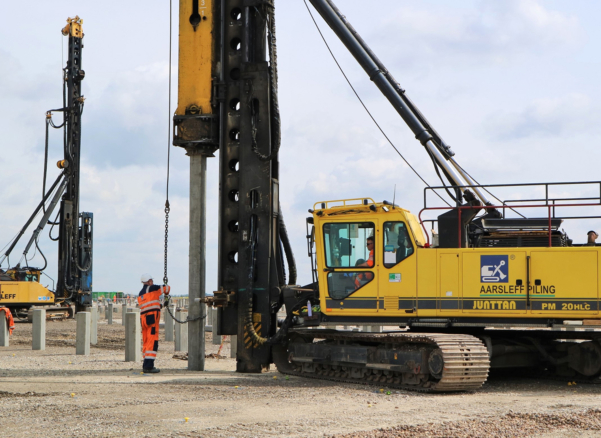
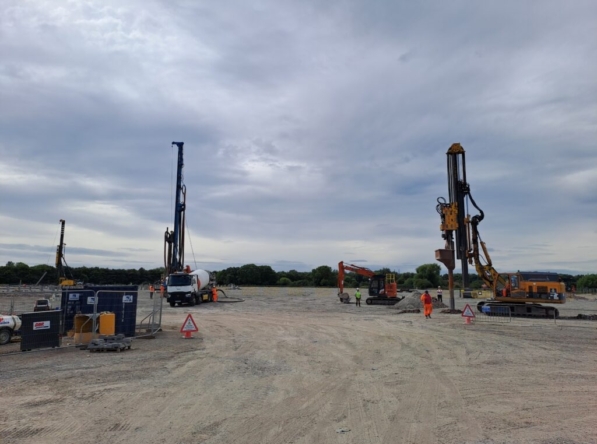
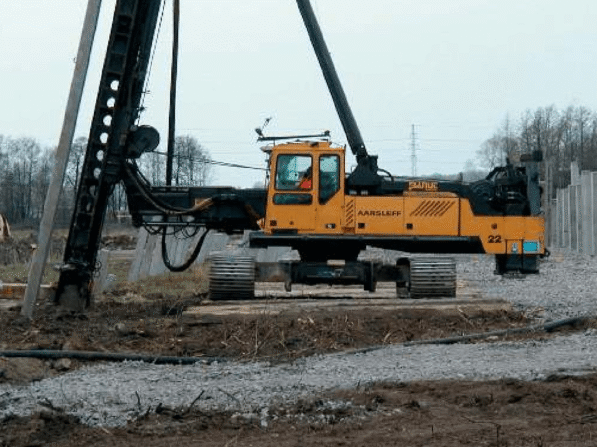
- Following ground investigation and design, installation begins with a hydraulic drive head attached to an excavator or specialist rig. The helical screw pile is aligned vertically or at a specified angle, depending on structural requirements.
- As torque is applied, the pile rotates into the ground. The helical plates draw the shaft downward, maintaining consistent penetration without removing soil. This displacement action helps preserve ground integrity while forming a secure foundation element.
- Installation depth is guided by torque resistance, which indicates load capacity. Once the required depth is achieved, the pile is cut or extended to suit foundation levels, ready for connection to the structure above.
Construction of Helical Screw Piles
Helical piles are manufactured from steel components designed for strength and durability. A central shaft forms the main body, with one or more helical plates welded along its length.
The configuration of these plates varies depending on ground conditions and load requirements. Larger diameters may be selected for softer soils, while smaller configurations suit denser ground.
Extensions can be added during installation, allowing piles to reach greater depths without compromising structural integrity. This modular approach supports flexibility on site, particularly where subsurface conditions change unexpectedly.
Ground Conditions for Screw Piling
Helical piling performs effectively across a broad spectrum of soils, though certain conditions are particularly well-suited:
- Soft clays and silts – Helical piles provide stable support where traditional shallow foundations may struggle with settlement.
- Loose sands – The helical plates improve load transfer by engaging with the surrounding soil, enhancing stability.
- Made ground – Sites with inconsistent fill material benefit from the controlled installation process of screw piling.
- Restricted access locations – Compact equipment allows installation in confined spaces where larger rigs would be impractical.
Very dense or highly obstructed ground may require alternative approaches, as resistance can limit penetration. Careful assessment ensures the selected method aligns with site conditions.
Advantages of Helical Screw Foundations
Helical piling offers a range of practical and engineering benefits, making it a preferred option in many scenarios:
- Rapid installation with minimal site disruption
- Reduced noise compared to driven piling techniques
- Immediate load-bearing capability following installation
- Limited spoil generation due to the displacement method
- Flexibility for removal or reuse in temporary works
These advantages help deliver projects efficiently, especially when environmental constraints or tight timelines call for a streamlined approach.
In addition, screw piles contribute to lower site impact by avoiding large-scale excavation and reducing material waste. This aligns with modern construction practices that prioritise efficiency and responsible resource use.

Written by Aarsleff UK
12 August 2026
Aarsleff Ground Engineering is a leading sheet piling supplier and contractor. We specialise in designing and delivering sheet piling solutions across the UK.

Reviewed by Mark Fuller, Piling Director
1 May 2026
Mark Fuller is the Piling Director at Aarsleff Ground Engineering. He has amassed a wealth of experience and knowledge within the specialist piling and ground engineering industry throughout his 20 years of experience in the industry. Mark is directly responsible for the overall driven piling within the business, including technical and operational management of awarded contracts, development of strategic long-term plans and planning of recruitment and resource.
Close