Table of Contents
- About Micro Piles
- How Does Micro Piling Work?
- How Are Micro Piles Installed?
- Advantages of Micro Piling
Last updated
30 April 2026
About Micro Piles
Micro piles are small-diameter piles that are used in a wide range of structural and ground stabilisation applications. They are effective in strengthening existing structures, such as bridges, retaining walls, and historic buildings, as well as for use in new construction where space is restricted.
These piles can be installed in a range of ground conditions. Their ability to function as ground anchors makes them valuable in slope stabilisation, retaining wall reinforcement and more.
These lightweight, versatile solutions are practical for sites with difficult access, overhead restrictions or environmental sensitivities.
How Does Micro Piling Work?
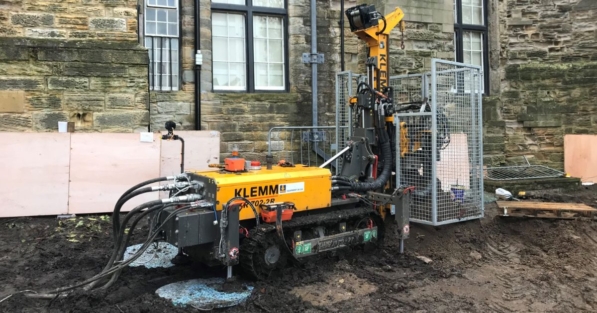
Micro piling uses versatile rigs to install small-diameter piles in areas where larger equipment struggles to operate, such as sites with limited access or low headroom.
This small rig drills or drives a narrow casing or borehole to the required depth, working through varied materials such as soil, clay, or occasionally rock. In stable ground like clay, the hole can often be left open, while loose soils or areas with high groundwater levels may require temporary secure casings.
Once the required depth is reached, steel reinforcement is added and the bore is filled with high-strength grout. This bonds the pile to the surrounding ground. This then makes micro piles capable of carrying heavy loads in compression, tension and resisting sideways forces. The precision, low vibration, and minimal disturbance offered make them perfect for work in sensitive environments.
How Are Micro Piles Installed?
The installation of micro piles varies depending on ground conditions, environmental considerations and the load requirements – but the process typically flows through a number of stages:
- Site investigation – Before the start of work, a detailed site investigation is carried out, which includes surveys to determine the profile of the soil, groundwater conditions and any obstructions or nearby structures to be aware of.
- Design – Engineers design the micro pile system to suit conditions to suit the site-specific conditions. This includes selecting pile diameter, materials and load capacity as well as understanding layout and spacing.
- Site preparation – The working area is then prepared, and pile positions are set out. Where space is restricted, rigs and equipment are selected to match access limitations.
- Pile installation – Micro piles are then either drilled or driven into place using specialist rigs.
- Reinforcement and Grouting – Reinforcements are placed into the pile bore, which is then filled with grout or concrete, creating a durable pile capable of carrying high capacity loads.
- Testing – Installed micro piles may undergo load testing to verify design performance, ensuring they meet preset strength and stability criteria.
Advantages of Micro Piling
The advantages of using micro piling systems include:
- These systems perform well in tension, compression and lateral loading.
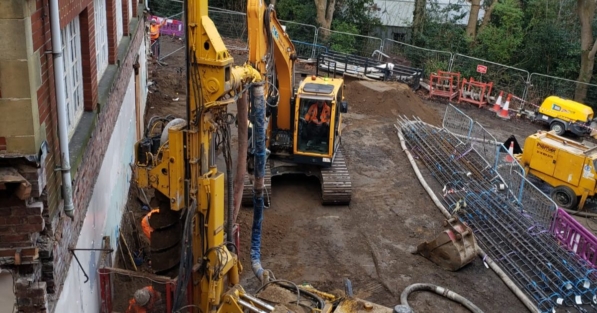
- Can be installed in restricted access or low headroom environments, including basements.
- Suitable for almost any ground condition, from soft soil to rock.
Causes minimal vibration and disturbance, making it ideal near sensitive structures. - Allows work to proceed without rerouting existing utilities, reducing cost and disruption.
- Quick installation times when soil is suitable, with high load capacities.
- Can be easily incorporated into existing foundation systems for structural upgrades.
- Requires less concrete and steel than many other traditional systems.
- Can be installed with low-emission or electric-powered rigs for reduced environmental impact.

Written by Aarsleff UK
30 April 2026
Aarsleff Ground Engineering is a leading sheet piling supplier and contractor. We specialise in designing and delivering sheet piling solutions across the UK.

Reviewed by Mark Fuller, Piling Director
29 April 2026
Mark Fuller is the Piling Director at Aarsleff Ground Engineering. He has amassed a wealth of experience and knowledge within the specialist piling and ground engineering industry throughout his 20 years of experience in the industry. Mark is directly responsible for the overall driven piling within the business, including technical and operational management of awarded contracts, development of strategic long-term plans and planning of recruitment and resource.
Close